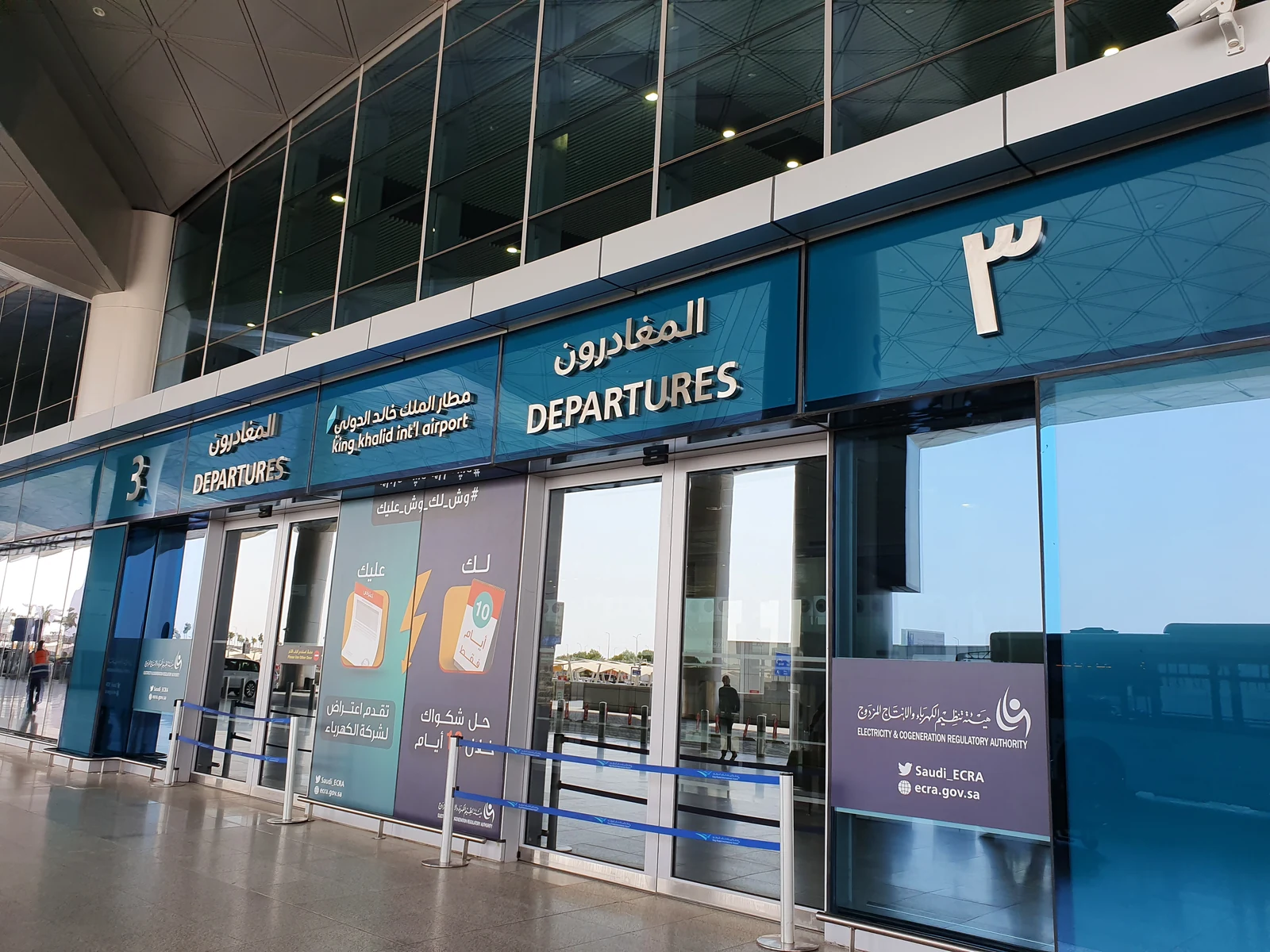
A series of attacks around Saudi Arabia’s airports disrupted air travel in early October, with the most serious incidents reported at King Khalid International Airport in Riyadh. The attacks were claimed by Yemen’s Houthi movement, while Saudi authorities reported the casualties, airport damage and flight suspensions. The claims in the original brief combine several dates and locations, so they need to be separated.
The clearest current update is from the Embassy of India in Riyadh. In an advisory timestamped 14 October 2026 at 1500 hours, it said two Indian nationals injured in the 10 October Riyadh airport attack remained in intensive care. One more had moved from intensive care to a high-dependency unit, four were in a normal ward and one had been discharged. [4]
Key points
- The Riyadh airport incidents happened earlier in October, not during the current 14–15 October reporting window.
- Reuters and UN News reported deaths, injuries, airport damage and suspended or diverted operations.
- “Houthi attack” should be attributed: the group claimed responsibility, while Saudi authorities reported the impacts.
- The direct Indian Embassy update does not support the claim that four Indians were in ICU; it says two remained there on 14 October.
- Riyadh, Dammam and Saudi Aramco-related claims are separate and should not be merged.
What happened at Riyadh airport?
The attacks unfolded over several days. Reuters reported on 9 October that a Thursday strike at Riyadh airport killed three people, injured several others and damaged a Saudia Airlines aircraft. Smoke was visible over the airport, and airlines cancelled or suspended some flights. Saudi civil aviation authorities later said air traffic had returned to normal after that incident, although flight tracking still showed a gradual resumption. [1]
A more serious Saturday strike was reported the following weekend. UN News, citing Saudi authorities, said a Houthi missile attack on King Khalid International Airport killed 12 people and wounded more than 300; the civil aviation authority reported 309 wounded, some critically. Operations were suspended and flights diverted. The dead included Saudi and foreign nationals. [3]
Reuters’ 11 October account described the Saturday strike as killing 13 people and injuring more than 300, reflecting a difference in contemporaneous casualty reporting. It also reported that the airport was closed after the attack. The article separately described another projectile hitting a passenger terminal on Sunday, killing one person and wounding 11. [2]
The available reports therefore support a series of Riyadh incidents, rather than one single attack with one settled casualty number. The article does not treat the differing totals as interchangeable.
Why the flight disruption matters
The disruption was real but not uniform across the kingdom. After the Thursday attack, Reuters reported cancellations, delays and suspensions affecting many airlines, while some Middle Eastern carriers resumed service. After the later attack, the airport was closed and flights were diverted. [1] [2]
The Embassy of India’s 14 October advisory gives the most specific current operational picture available for Indian travellers. It said flight operations remained suspended at King Khalid International Airport in Riyadh. Operations at Dammam, Jeddah and Medina continued, although with some disruption. It also said Air India, Air India Express, Akasa Air and IndiGo had suspended flights to and from Saudi Arabia until 17 October. Saudia continued scheduled flights from Dammam, Jeddah and Medina, while Flynas operated a Dammam–Lucknow service. [4]
That evidence does not establish that every global flight was cancelled, or that every Saudi airport was closed. It shows a severe and changing disruption centred on Riyadh, with different conditions at other airports.
For a wider view of regional security and transport risk, Verdvit’s U.S.–Iran and Hormuz strikes explainer provides related background. The Riyadh airport reports themselves, however, concern Saudi aviation and the Yemen conflict.
What is verified about the four Indians in ICU claim?
The “four Indians in ICU” wording is not supported by the direct consular update opened for this report. The Embassy of India in Riyadh said two Indian nationals injured in the 10 October Riyadh airport attack continued to be in ICU on 14 October. It recorded three other stages of care: one person shifted from ICU to HDU, four in a normal ward and one discharged. [4]
That does not mean the total number of Indian nationals receiving medical treatment was two. It was higher. But the source distinguishes ICU patients from those in other wards, and the distinction matters. The earlier figure may have referred to a different update, a different point in time or a combined count, but the current direct source does not establish it.
The Embassy also advised Indian nationals to follow local authorities’ instructions, stay indoors during an aerial attack and avoid circulating videos or news about ongoing events. Those instructions underline why casualty and security claims should be attributed to official updates rather than repeated from social media.
Riyadh, Dammam and Aramco claims are not one incident
The Houthi military spokesperson claimed that the group had also struck Dammam’s King Fahd International Airport and two Saudi Aramco facilities. Reuters said Saudi Arabia’s government media office and Aramco did not respond to requests for comment in its 11 October report. The Saudi civil aviation authority did confirm a strike on Dammam airport and said damage assessment and safety inspections were underway. [2]
These claims should not be folded into the Riyadh airport casualty account. Riyadh is in central Saudi Arabia; Dammam is in the Eastern Province. The airport reports also mention other alerts and interceptions, including in the south, but those are separate events. No source opened for this report independently verifies the full Aramco damage allegation.
Readers looking for context on how attack reporting can evolve should also see Verdvit’s Sochi tanker-fire report, which distinguishes confirmed rescue facts from an unverified attack claim.
What remains unclear and what happens next?
The main unresolved questions are the final casualty totals for each Riyadh strike, the full extent of damage at the airport and the status of the alleged strikes on Aramco facilities. Reporting also differs on the Saturday death toll. Those differences should be resolved through later Saudi civil aviation, hospital, embassy or government statements rather than by choosing the largest number.
The immediate practical issue is flight status. The Indian Embassy’s 14 October notice said Riyadh operations remained suspended and Indian carriers’ Saudi suspension ran through 17 October. Travellers should check their airline and airport directly before travelling, because the status can change after an interception, safety inspection or new advisory. A related Verdvit UK–Iran aviation security report covers the broader caution needed when flight and security claims move quickly.
The verified position as of the reporting cutoff is narrower than the original brief: Riyadh airport suffered a series of reported attacks and major disruption; Houthi attribution remains an attributed claim; and the Embassy of India’s latest update records two Indians in ICU, not four.