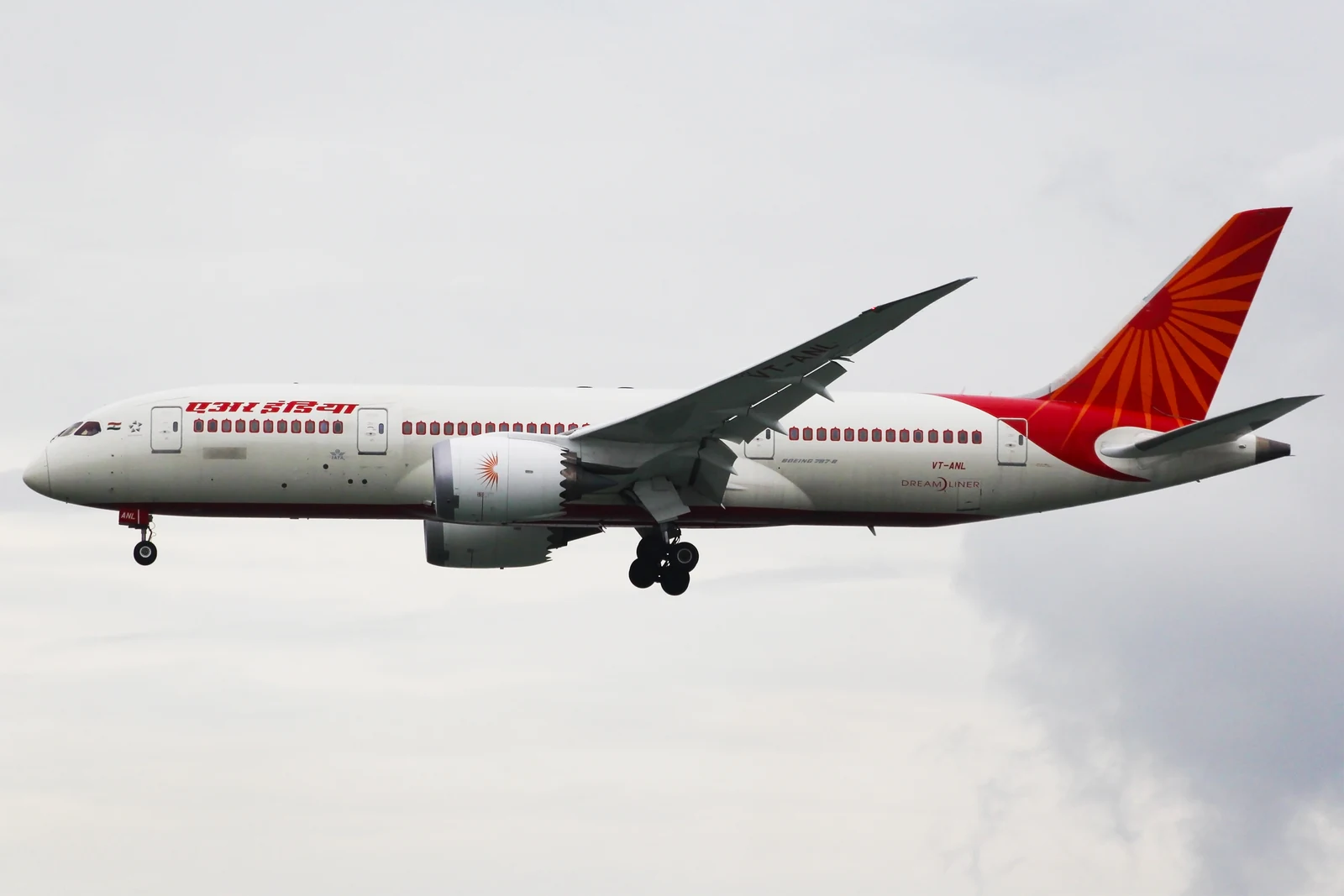
The Air India Frankfurt–Delhi service AI2030 was diverted to Jaipur on Wednesday, 14 October, after authorities responded to a reported Squawk 7500 signal. The Boeing 787-9 landed safely, was moved to an isolation bay and checked before passengers and crew were screened and the flight was cleared to continue to Delhi. The available reporting does not establish that the aircraft was hijacked. [1] [2]
Key points
- AI2030 was flying from Frankfurt to Delhi when the security response began.
- Reports said the aircraft transmitted, or appeared to transmit, Squawk 7500, the code associated with unlawful interference.
- The aircraft landed safely in Jaipur and was inspected under security protocol.
- Passengers and crew were deboarded and screened before reboarding.
- Officials and later reporting pointed to a possible mistake or technical problem, not a confirmed hijacking.
What happened on the Frankfurt–Delhi flight
According to reporting that cited DGCA and airport sources, AI2030 was diverted while approaching Delhi after a perceived security concern. The aircraft landed at Jaipur International Airport and was taken to a designated isolation bay. Hindustan Times reported that all passengers and crew were safely evacuated to a holding area while security checks took place. [1]
The reported trigger was Squawk 7500. In aviation, the transponder code is treated as a possible signal of unlawful interference, including a hijacking. That meaning explains the rapid escalation, but the code itself is an alert rather than proof that a hijacking occurred. The Indian Express said the aircraft appeared to squawk 7500 while in the Mumbai Flight Information Region, but that the pilot told air traffic control they had not sent an emergency signal. [4]
The two quoted headcounts are consistent. The Indian Express described 306 people deboarding; Livemint’s PTI-based account gave 293 passengers and 13 crew, which also totals 306. Both reports describe passengers and crew going through security checks. These are reported figures rather than a published final manifest. [2] [4]
Security checks and the flight’s onward journey
After landing, the aircraft and baggage were checked in the isolation area. Passengers were escorted away from the aircraft while security agencies examined it. Air India said the relevant agencies cleared the aircraft and crew, and that passengers underwent checks before reboarding the same plane. [1] [2]
The Indian Express reported that the all-clear came roughly five hours after the diversion and that AI2030 then left Jaipur for Delhi with the same pilots. It said the aircraft reached Indira Gandhi International Airport at 3:12 pm. Those details describe the operational outcome reported on 14 October, not evidence that the initial alert was genuine. [4]
The response included airport security and police teams. Hindustan Times also reported that the National Security Guard was placed on standby in New Delhi, while the aircraft was screened in Jaipur. Police sources separately referred to a reported bomb threat, but that account was not presented as a confirmed device or attack. [1]
Why Squawk 7500 does not equal a hijacking
Squawk codes allow air-traffic controllers to identify an aircraft’s situation without relying only on radio communications. Code 7500 signals possible unlawful interference, so controllers and security agencies must treat it seriously. The precautionary response can include priority handling, diversion, isolation and searches.
That protocol is designed to manage uncertainty. A mistaken selection, communications malfunction or other technical issue can produce a high-consequence alert without an attacker taking control of the aircraft. The Indian Express cited the Jaipur airport chief as saying a preliminary account suggested the signal may have been issued by mistake, while also stressing that the cause remained under investigation. [4]
The distinction matters in this case. News reports used terms such as “hijack alert,” “hijacking scare” and “perceived security concern,” but the subsequent clearance of the aircraft and the reported continuation to Delhi do not by themselves explain how the code was transmitted. Neither the airline statement reproduced by major outlets nor the cited regulator and police accounts confirmed an actual hijack. [1] [2] [3]
What remains unclear
The public reports do not settle whether the code was manually selected, generated by a cockpit or aircraft-system fault, or caused by an air-traffic-control communication problem. They also do not establish whether a bomb threat was made separately from the transponder alert or how investigators assessed that claim.
The remaining uncertainty concerns the alert and investigation, not an arithmetic conflict between these headcounts. A total of 306 people and a breakdown of 293 passengers plus 13 crew describe the same number on board. Neither of these accounts supplies a final official manifest or a completed investigation explaining the signal. [2] [4]
What happens next
The DGCA investigation and any airport or police inquiry should establish the source of the alert and whether a technical or human error was involved. Further official findings could also clarify the reported bomb-threat reference, the exact timeline and the passenger manifest.
Until those findings are published, the most supportable account is narrower: AI2030 was diverted to Jaipur after a reported Squawk 7500 or related security concern, landed safely, underwent checks and later continued to Delhi. The event prompted a genuine security response, but the available evidence does not show that the aircraft was actually hijacked. [1] [2] [3] [4]