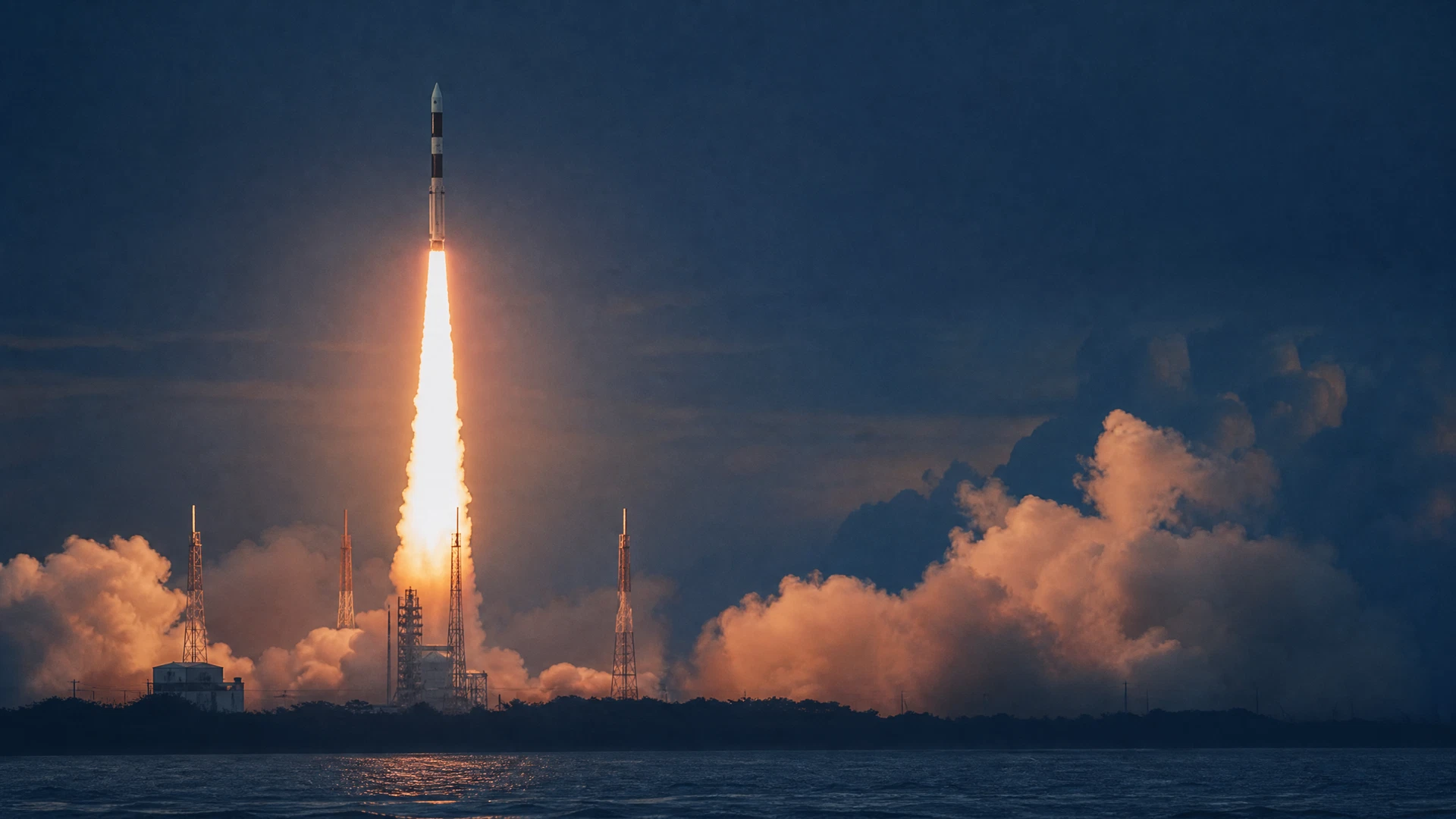
The Indian Space Research Organisation (ISRO) has launched the EOS-05 Earth-observation satellite, beginning a mission intended to establish India’s first dedicated imaging spacecraft operating from geosynchronous orbit. The launch of the spacecraft represents a key milestone for the space agency as it seeks to expand its imaging capability from this specific orbital altitude.
Early Morning Liftoff
The GSLV-F17 rocket lifted off from the Satish Dhawan Space Centre at 2:55 a.m. IST on September 4. The launch proceeded as planned, moving the mission toward its initial orbital deployment phase. The liftoff from the Satish Dhawan Space Centre marked the beginning of a complex sequence of events designed to place the spacecraft into its designated position. The successful execution of the launch sequence at 2:55 a.m. IST demonstrated the reliability of the launch vehicle for this mission profile. The early morning liftoff was the first step in a mission intended to establish a new capability for the country. The launch vehicle performed its role in lifting the spacecraft from the Satish Dhawan Space Centre. The September 4 launch date was met, allowing the mission to proceed to its next phase. The successful liftoff is a critical component of the overall mission architecture.
Orbit Insertion
Around 18 minutes after launch, the rocket successfully placed the EOS-05 spacecraft into its intended Sub-Geosynchronous Transfer Orbit. According to ISRO, the satellite weighed 2,367 kilograms at launch. The insertion into the Sub-Geosynchronous Transfer Orbit occurred as planned, approximately 18 minutes into the flight. The 2,367-kilogram spacecraft was separated from the launch vehicle following the successful insertion. The precise timing of the orbit insertion, around 18 minutes after launch, was a key objective of the flight. The Sub-Geosynchronous Transfer Orbit is the intended initial destination for the spacecraft before it moves to its final position. The weight of the satellite, at 2,367 kilograms, was confirmed by ISRO following the successful launch and orbit insertion. The successful placement of the spacecraft into the Sub-Geosynchronous Transfer Orbit is a major step forward for the mission. The 18-minute mark after launch was a critical moment for the mission's success.
Next Steps
The spacecraft will now undergo further manoeuvres to reach its final operational position in geosynchronous orbit, where it is intended to provide dedicated imaging capabilities. The transition from the Sub-Geosynchronous Transfer Orbit to the final geosynchronous orbit will involve a series of planned operations. Once in its final position, the spacecraft is intended to serve as India’s first dedicated imaging satellite operating from geosynchronous orbit. The successful completion of these manoeuvres will allow the spacecraft to begin its primary mission. The establishment of this imaging capability is the ultimate goal of the mission following the successful launch and initial orbit insertion.