Tata Consultancy Services subsidiary HyperVault and its partners announced on September 5, 2026, that they plan to invest up to ₹700 billion ($7.41 billion) in a phased artificial-intelligence data-centre campus in Hyderabad, Telangana. HyperVault said it had secured 264 acres for a facility designed to reach as much as one gigawatt of capacity and serve frontier AI companies and hyperscalers. [1] [2]
The development is currently an announced plan, not an operating campus. The company and Reuters describe phased construction tied to customer demand and technology requirements, but the reviewed announcements do not establish completed financing, all required permits, construction commencement or signed customer commitments. Telangana officials and TCS executives have publicly backed the proposal, while the eventual pace and scale remain contingent on execution. [1] [2] [3]
Key points
- HyperVault, a TCS subsidiary, announced the Hyderabad campus on September 5, 2026. [1] [2]
- The proposal covers up to one gigawatt of AI data-centre capacity on 264 acres. [1] [2]
- HyperVault and partners put the investment ceiling at up to ₹700 billion, or about $7.41 billion at the exchange rate cited by Reuters. [1] [2]
- The campus is intended for high-density graphics-processing-unit deployments used in AI training, inference and other advanced workloads. [1] [2] [3]
- Development is planned in phases, with build-out linked to customer demand and technology requirements. [1] [2] [3]
- Green-energy and water-neutral design principles are proposed, but the public announcement does not provide operating data or a delivery timetable. [2] [3]
What happened in Hyderabad
HyperVault said it had selected Hyderabad and secured 264 acres for the project. Its stated design target is a campus of up to one gigawatt, a measure of the maximum power capacity intended for the data-centre site rather than a claim that that capacity is already installed. The project is to be built in phases, allowing capacity to be added as demand and computing technology develop. [1] [2]
The intended customers are frontier AI companies and hyperscalers. In practical terms, that means the proposed facility would be built for large-scale computing users that need dense clusters of GPUs, the processors commonly used to train and run AI models. The company describes liquid cooling, larger power blocks and faster deployment as part of the infrastructure it is planning. [2] [3]
TCS chief executive and managing director K Krithivasan said Hyderabad offered the scale, talent and ecosystem needed to serve global customers. HyperVault chief executive and managing director Deepesh Kiran Nanda said the company was designing for higher-density computing and liquid cooling. These are company statements about the intended strategy, not independent confirmation that the specifications have been delivered. [1] [2]
Verified background and context
The proposal fits TCS’s stated effort to connect infrastructure with its cloud, engineering, enterprise-transformation and AI capabilities. TCS describes HyperVault as a subsidiary building secure, scalable, AI-ready infrastructure for hyperscalers, AI companies and global enterprises. The company says the Hyderabad campus is part of a broader effort to build data-centre capacity in phases toward more than one gigawatt, but that broader corporate aspiration should not be confused with completed capacity at this site. [2]
Hyderabad’s selection also reflects the project’s regional framing. Telangana Chief Minister A. Revanth Reddy called the proposal historic and argued that computing access is becoming a form of public infrastructure. IT and Industries Minister D. Sridhar Babu said discussions began after a conversation between Reddy and Tata Sons Chairman N. Chandrasekaran in Davos in January 2026. Those statements document political support and the reported origin of the discussions; they do not substitute for statutory approvals or a construction record. [2] [3]
The stated design includes green energy and water-neutral principles. The company also says the project could support activity in power, cooling, networking, construction, engineering and operations, and could generate several thousand direct and indirect jobs. These are expected effects presented in the announcement, not measured outcomes. [2] [3]
Why it matters for readers and the region
A one-gigawatt AI campus would represent a substantial planned concentration of power, cooling and network infrastructure. For AI companies, purpose-built sites could offer denser computing environments than general-purpose data centres. For Telangana, the proposal places Hyderabad in the competition to attract AI infrastructure, related suppliers and high-skilled technical work. [1] [2] [3]
The investment figure also signals the capital intensity of the AI infrastructure build-out. The announced ceiling is a maximum commitment described by HyperVault and its partners, not a disclosed amount already spent. Reuters reported the figure as up to ₹700 billion and noted the dollar equivalent using an exchange rate of ₹94.48 per dollar. [1]
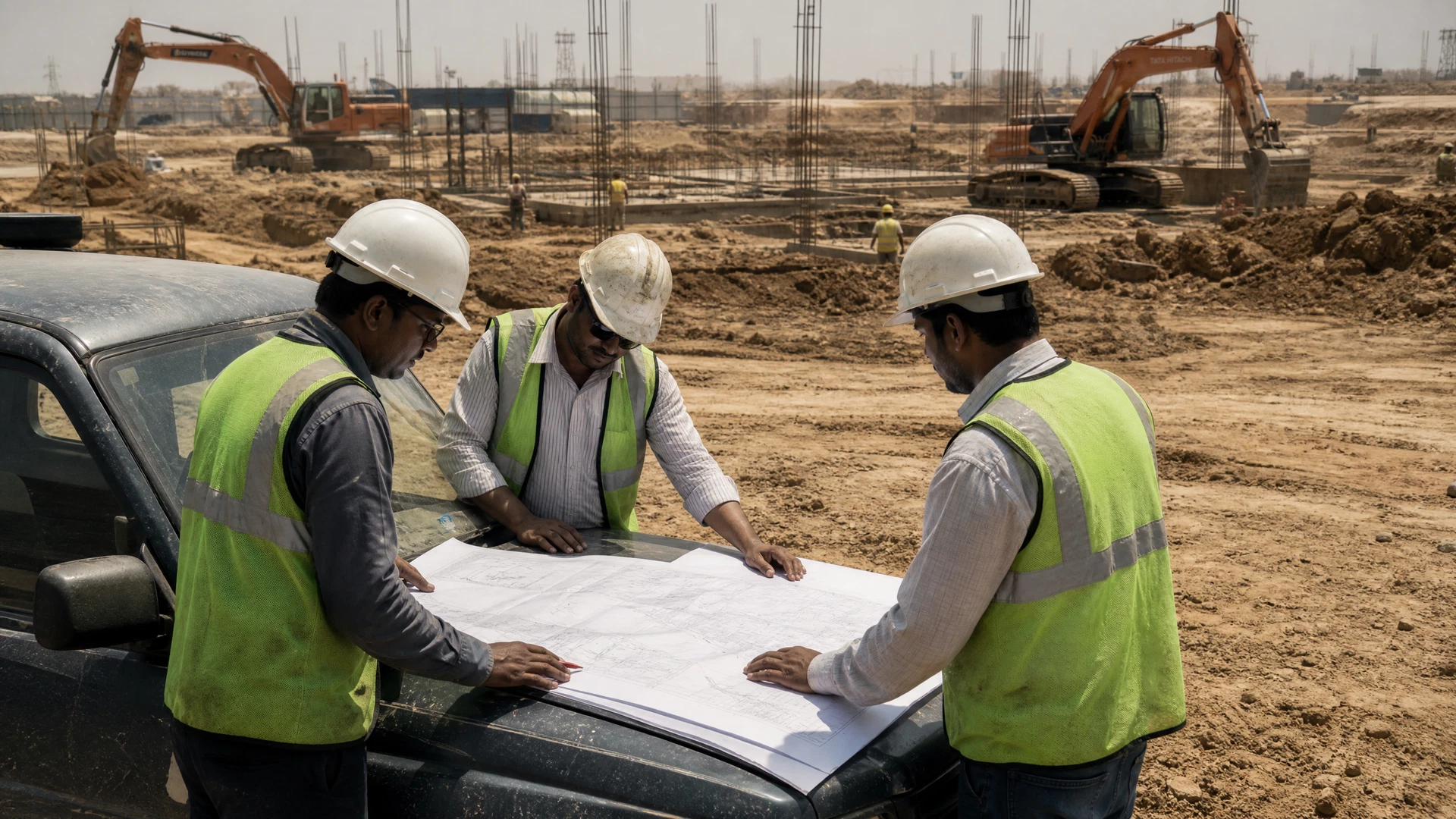
For residents, businesses and policymakers, the practical questions are not settled by the headline capacity. A campus of this scale would need reliable electricity, transmission connections, cooling systems, water-management arrangements, network links, land development and a sequence of permits. The public materials identify design ambitions, but do not provide enough detail to assess the final local resource load or schedule. [1] [2]
What remains uncertain
The announcements establish land acquisition or securing, a proposed capacity, an investment ceiling and intended uses. They do not establish when construction will begin, when the first phase will open or whether the full one-gigawatt target will be reached. No phase-by-phase spending schedule or completion date is given in the reviewed material. [1] [2] [3]
Financing is also not detailed at project level. The sources do not identify the debt-equity mix, the amount committed by each partner, customer contracts or the commercial terms that would support the full investment ceiling. The same gap applies to power procurement, water-neutral implementation, environmental permissions and local construction approvals. Those are verification gaps, not evidence that the plan has been cancelled or that any party has failed to meet an obligation.
The phrase “up to one gigawatt” likewise describes a ceiling. Actual delivered capacity could be lower, later or spread across multiple phases. Any report that presents the entire figure as already built, funded or available would go beyond the evidence in the company announcement and the reporting reviewed here. [1] [2]
What happens next
The next meaningful milestones would be public evidence of project financing, detailed planning or permit decisions, power and water arrangements, construction mobilisation and the launch of the first operational phase. Customer announcements would also clarify whether the campus has contracted demand rather than only a target market.
HyperVault’s stated sequencing is to match development to customer demand and changing technology requirements. That makes customer commitments and phase-level specifications especially important to tracking the project. A later update should distinguish land secured from construction started, planned capacity from commissioned capacity and an investment ceiling from money actually deployed. [1] [2] [3]
Until those milestones are documented, the accurate status is planned. The September 5 announcement is significant because it identifies a major proposed AI infrastructure site, its scale and its sponsors. It is not yet evidence that Hyderabad has received a functioning one-gigawatt AI campus. [1] [2]