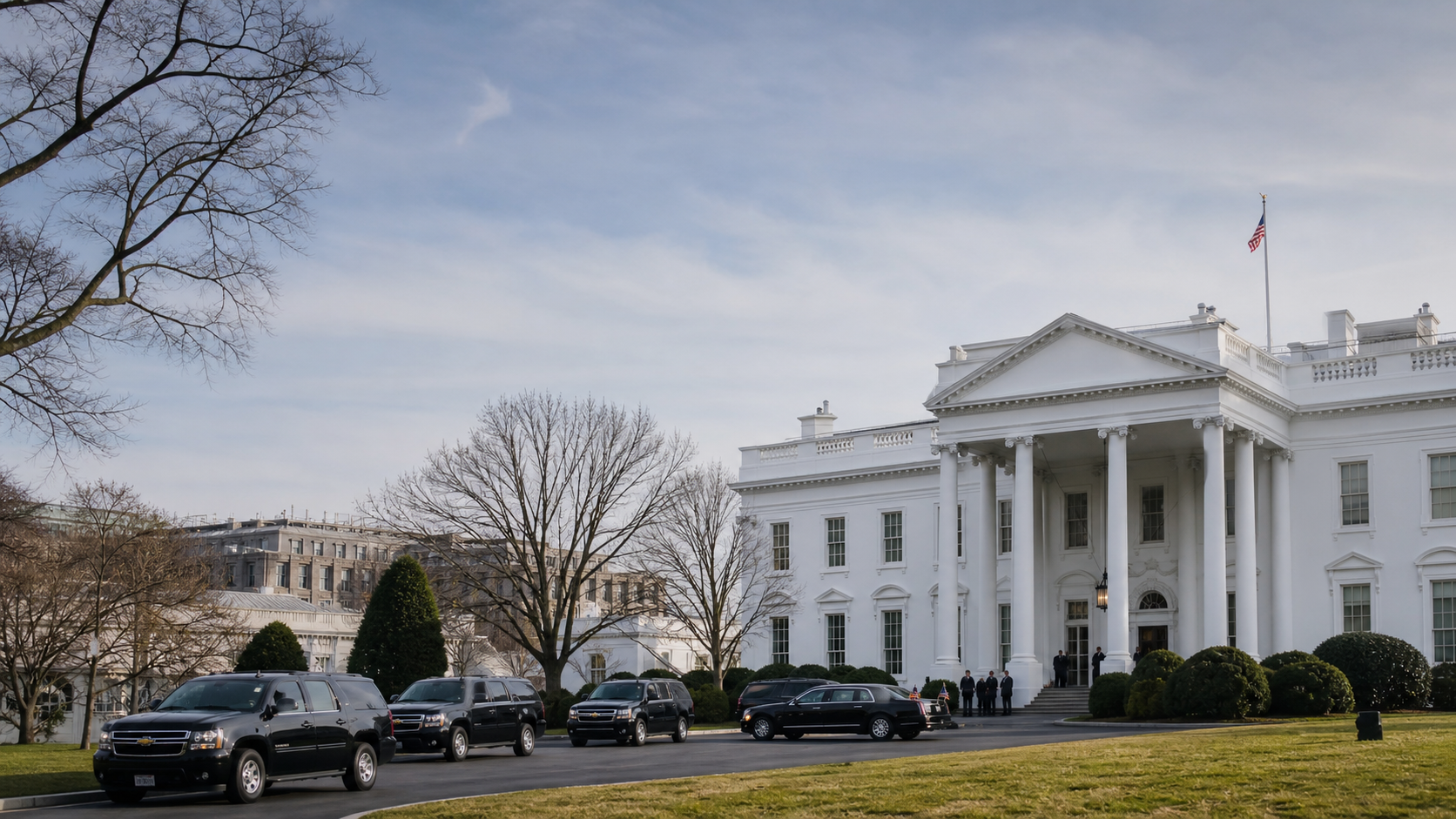
Chinese President Xi Jinping met US President Donald Trump at the White House on Thursday, 24 September 2026, in a high-profile summit that restored direct leader-level contact but produced no clearly documented breakthrough on the central disputes between Washington and Beijing. Reuters reported that trade, artificial intelligence, Taiwan and the war with Iran remained unsettled in its account of the meeting. [1]
The encounter established a channel for top-level engagement and delivered strong public symbolism, including a state dinner, but its policy status was limited. Xi said the leaders had reached a common understanding on many issues and provided new strategic guidance for bilateral relations without specifying those understandings; Reuters also reported that the White House had not yet issued its own summary. [1]
Key points
- Trump hosted Xi at the White House on 24 September 2026, with the leaders and their wives attending a state dinner. [1]
- It was Xi's first visit to Washington in more than a decade and the leaders' second meeting of the year. [1]
- Xi urged Washington to oppose Taiwan independence and called for regular military dialogue and crisis-prevention measures. [1]
- Reuters found no clear settlement on trade, AI, Taiwan or Iran. [1]
- Xi said AI development should remain under human control, without a reported technology-governance agreement. [1]
What the meeting established
The clearest verified outcome was the meeting itself. Trump received Xi at the White House, giving the relationship a leader-to-leader setting while tariff disputes, technology restrictions and security tensions remained active. The ceremony included a black-tie dinner attended by prominent technology executives, demonstrating that communication at the highest level remained possible even as the rivalry continued. [1]
What Trump and Xi said publicly
Trump emphasized his personal relationship with Xi and said the countries had made progress on trade since his May trip to China. At the dinner, he said the leaders understood that they represented different systems while maintaining ties between their peoples. Xi used a more institutional tone, saying the United States and China should act as responsible major countries and develop a new approach to getting along. [1]
Xi said the countries' interests were deeply intertwined, described competition as something that should be healthy, welcomed US companies in China and said he hoped Chinese companies would be treated fairly in the United States. He also called for regular military dialogue to improve crisis prevention. Reuters did not report a timetable, mechanism or binding commitment putting those statements into effect. [1]
Taiwan remained a central fault line
During an afternoon bilateral discussion, Xi urged the United States to oppose Taiwan independence, according to a readout from China's official news agency cited by Reuters. That was a restatement of Beijing's position, not evidence that Washington accepted a new formula. The article did not report a change in US policy toward Taiwan or a new agreement on arms, deterrence or cross-strait communication. [1]
The issue was sensitive because Trump had previously said he was holding in abeyance a US arms package for Taiwan worth about $14 billion, calling it a negotiating chip. Reuters reported that the delay had raised concern among some US allies and Republican lawmakers that economic negotiations could affect US support for Taipei. The summit account did not document a final decision on the package or a trade-off involving Taiwan. [1]
Trade and AI produced signals, not settlements
Trade was a principal reason for the summit's attention, but the available report describes expectations of stability rather than a completed bargain. Reuters said an extension of a trade truce was envisaged, while also reporting that major breakthroughs were not expected and that no clear agreement emerged on the difficult issues. It did not provide terms, deadlines, tariff schedules or purchase commitments that could be assessed as a final arrangement. [1]
Artificial intelligence offered another example of broad principles without an operational deal. Xi said AI development should always remain under human control. That is an official position reported in the meeting account, but Reuters did not report a joint safety standard, data-sharing arrangement, export-control concession or enforcement process. The report said people familiar with US plans expected Trump to maintain firm controls on technology China wants loosened. [1]
Iran was discussed without a new outcome
The meeting occurred while the Trump administration and Israel were engaged in a war with Iran, which Reuters said had driven up energy prices and weighed on Trump's public approval. Xi expressed support for the United States and Iran to return to a ceasefire and eventually negotiate a peace deal, according to China's Xinhua news agency as cited by Reuters. [1]
The record does not show that Xi offered a mediation framework, that Washington accepted a Chinese role or that the parties reached a ceasefire arrangement. Reuters reported little sign that Beijing was willing to pressure Iran to meet US demands. The summit therefore did not establish a new Iran channel or settlement timetable. [1]
Why the limited outcome matters
A direct conversation can reduce the risk that military or economic competition proceeds without senior-level communication, particularly when Taiwan, advanced technology and Iran are sources of tension. Xi's call for regular military dialogue was relevant to that risk, but the article did not confirm that a new dialogue mechanism had been agreed or resumed. [1]
What remains uncertain
The principal limitation is the absence, at the time of Reuters' report, of a White House readout explaining what Washington believed had been agreed. Xi's reference to common understanding was not accompanied by a list of commitments in the cited account. Without detailed language from both governments, it is not possible to determine whether the phrase referred to shared principles, negotiating instructions or an assessment of the discussion. [1]
The article also did not report a signed agreement, joint communique, implementation schedule or verification system covering trade, AI, Taiwan or Iran. That absence should not be converted into a claim that nothing was discussed privately. It means only that the available verified account does not document a concrete outcome in those areas. Later statements or actions would be needed to establish whether the meeting produced more than public positioning. [1]
What happens next
The next meaningful evidence will be specific and documentable: a US readout, a Chinese account with more detail or an official action translating the leaders' statements into policy. On trade, that would mean published terms for a truce extension or tariff arrangement. On AI, it would mean an identified rule, consultation or export-control change. On Taiwan, it would mean a recorded decision on arms or a new crisis-communication mechanism. On Iran, it would mean a confirmed ceasefire process or formally acknowledged negotiations. [1]
Until such evidence appears, the most accurate description is narrow. Xi's visit restored direct contact, allowed the leaders to signal an interest in managing rivalry and placed several urgent disputes in the same conversation. It did not, on the record available for this report, produce a clear breakthrough or show that the core disagreements had been resolved. [1]