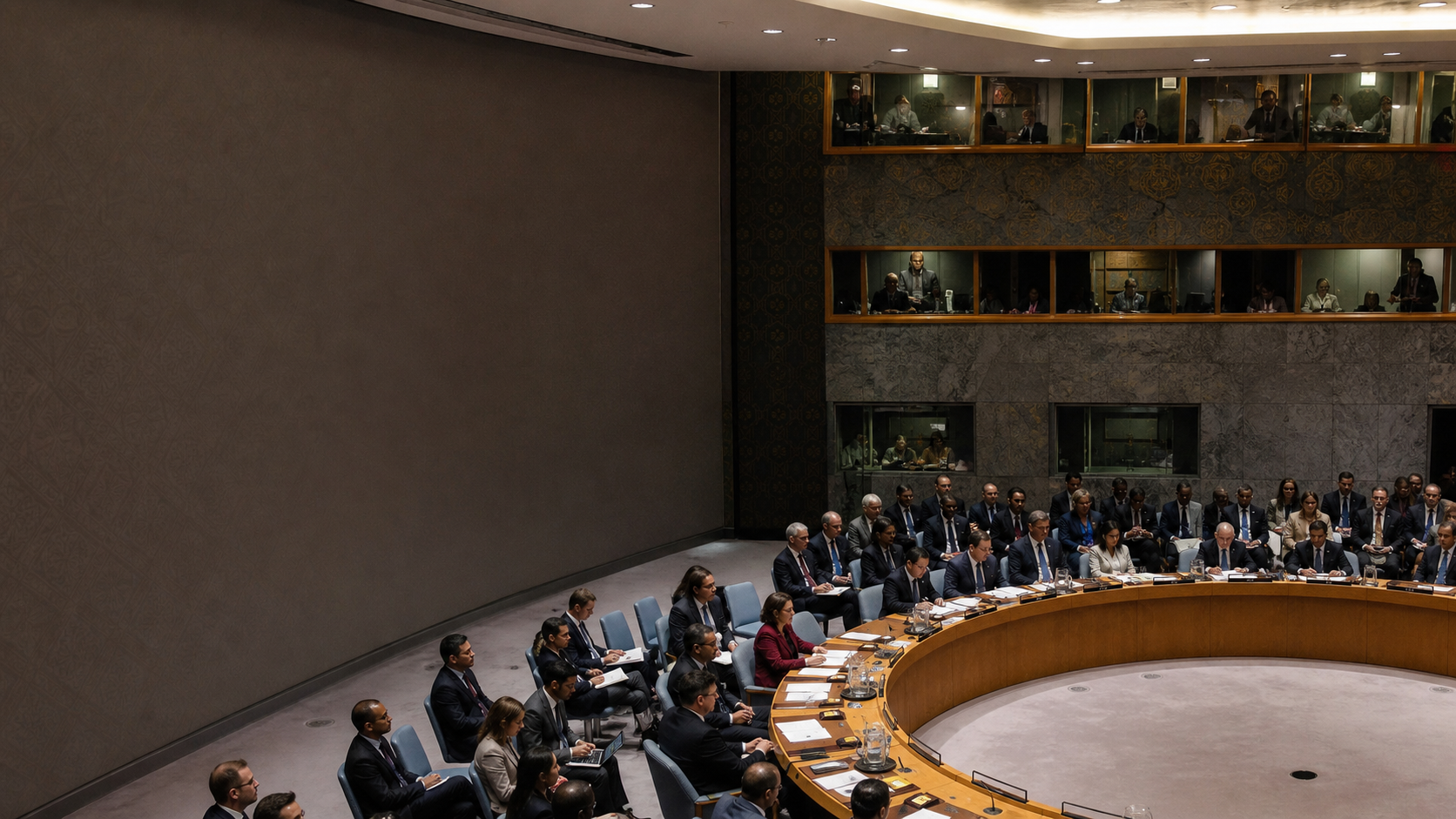
The United Nations Security Council renewed the mandate for the multinational mission tasked with countering Haiti’s armed gangs through March 31, 2027, approving the extension with 12 votes in favor, none against, and abstentions by China, Russia, and Pakistan, according to Reuters. The decision followed fresh gang killings and was framed as a way to sustain an international security presence ahead of Haiti’s planned December elections, even as the mission remains under its intended strength and faces funding gaps. [1]
Key points
- Security Council extends Haiti’s gang-suppression mission to March 31, 2027; the vote was 12–0 with three abstentions. [1]
- Reuters links the decision to fresh gang killings and the goal of stabilizing conditions before planned December elections. [1]
- The mission remains below intended strength and underfunded, creating uncertainty about real-world impact. [1]
- China, Russia, and Pakistan abstained, citing concerns over personnel, funding, and efficacy, per Reuters. [1]
- Authorization endures, but effectiveness depends on closing staffing and financing gaps. [1]
What happened
Reuters reported on September 29, 2026, that the Security Council approved a resolution extending the multinational force’s mandate in Haiti to March 31, 2027. Twelve members voted in favor, none voted against, and China, Russia, and Pakistan abstained. The move followed fresh gang killings that again highlighted the security emergency confronting Haitian communities. [1]
The renewed authorization is intended to maintain an international framework to help Haitian authorities combat entrenched armed groups during a politically sensitive period. As Reuters described it, Council supporters sought to avoid a lapse in legal backing for the mission just as Haiti moves toward planned December elections. [1]
At the same time, Reuters emphasized that the mission’s operational reality lags behind its mandate. Shortfalls in personnel and financing persist, limiting how much the extension alone can change conditions on the ground without additional commitments. [1]
Why it matters
By extending the mandate to March 31, 2027, the Council preserved a legal and political structure for international security support as Haiti approaches its election timetable. The distinction between having authorization and having capacity is central: a mandate can enable coordination and legitimacy, but the ability to deter and disrupt gangs depends on whether contributors deliver the troops, equipment, and resources implied by that authorization. Reuters underscored that these inputs remain below intended levels. [1]
The abstentions carry their own signal. Reuters reported that China, Russia, and Pakistan withheld affirmative votes over concerns related to personnel, funding, and efficacy—issues that speak directly to whether the mission can perform as designed. Their stance did not block the resolution, but it adds pressure on backers to demonstrate measurable improvements in security indicators that matter to Haitian civilians. [1]
With recent killings as the backdrop, the Council’s decision is as much about buying time for political processes as it is about immediate security outcomes. Whether that time is used to close the mission’s gaps will shape the mission’s credibility and its contribution to a safer environment for electoral logistics and participation. [1]
Background and context
Reuters framed the extension as a response to recurring violence and as a continuity measure for an understrength mission already on the ground. The force was established to support Haitian authorities in tackling heavily armed gangs that exert control over neighborhoods, key routes, and daily life, but has struggled to reach intended staffing and funding levels. Those constraints have fed doubts about its ability to change the security calculus without fresh resources. [1]
Against this backdrop, the planned December elections present a tight window in which security conditions need to improve enough to enable routine electoral tasks—moving personnel and materials, safeguarding polling sites, and ensuring voters can travel safely. The extended mandate theoretically spans the pre-election period and the months afterward, providing legal continuity through potential phases of campaigning, voting, and immediate post-election stabilization. Yet, as Reuters noted, authorization without adequate manpower and financing may not deliver the necessary presence where it is most needed. [1]
Diplomatically, the 12 votes in favor show that a majority of Council members preferred maintaining the mission’s legal footing rather than risking a gap in coverage. The three abstentions, however, highlight enduring skepticism about whether existing structures and contributions can produce tangible results—a skepticism that aligns with Reuters’ emphasis on the mission’s resource shortfalls. [1]
What remains uncertain
Reuters pointed to several unknowns that will determine whether the extension translates into improved security. First, future personnel commitments are unresolved: which states will provide additional contingents, how quickly deployments can occur, and whether the mix of capabilities will match on-the-ground requirements. Second, funding flows remain in question; pledges, disbursement timing, and conversion into field-ready capacity are critical variables. Third, the mission’s effectiveness—measured in reduced killings, kidnappings, and gang territorial hold—depends on whether deployments reach sufficient density and sustain operations in priority areas. Finally, coordination with Haiti’s election timeline is not guaranteed, given the volatile backdrop that Reuters described and the logistical demands of voting under threat. [1]
These uncertainties do not negate the value of a mandate; they define the hurdles that must be cleared for the mandate to matter. The test ahead is whether political authorization can be matched by the practical means to alter conditions on streets and in neighborhoods most affected by violence. Reuters’ account leaves those questions open pending concrete announcements and measurable results. [1]
What happens next
With the mandate now running through March 31, 2027, the focus shifts from Council procedure to execution. Reuters suggests that implementation steps—troop generation, logistics, and financing—will determine whether the mission can move from understrength authorization to credible on-the-ground presence. Indicators to watch include official announcements of new deployments, confirmation that funding has been disbursed and translated into equipment and sustainment, and reporting on changes in the frequency or severity of gang attacks. [1]
Progress on these fronts could create the conditions for Haiti’s planned December elections to proceed with greater security. If gaps persist, the extension risks being a procedural win that leaves the core challenge—public safety amid organized violence—largely unchanged. Reuters framed this as the immediate practical test for the mission and for Council members that backed the renewal. [1]