 VERDVIT
Tesla Flying Car? What Musk’s Roadster Demo Actually Proved
Tesla’s October 2026 Roadster reveal showed short, controlled airborne stunts with SpaceX-linked thrusters—not a certified everyday flying car. This explainer separates what was demonstrated from Musk’s earlier promises and Tesla’s future production target.
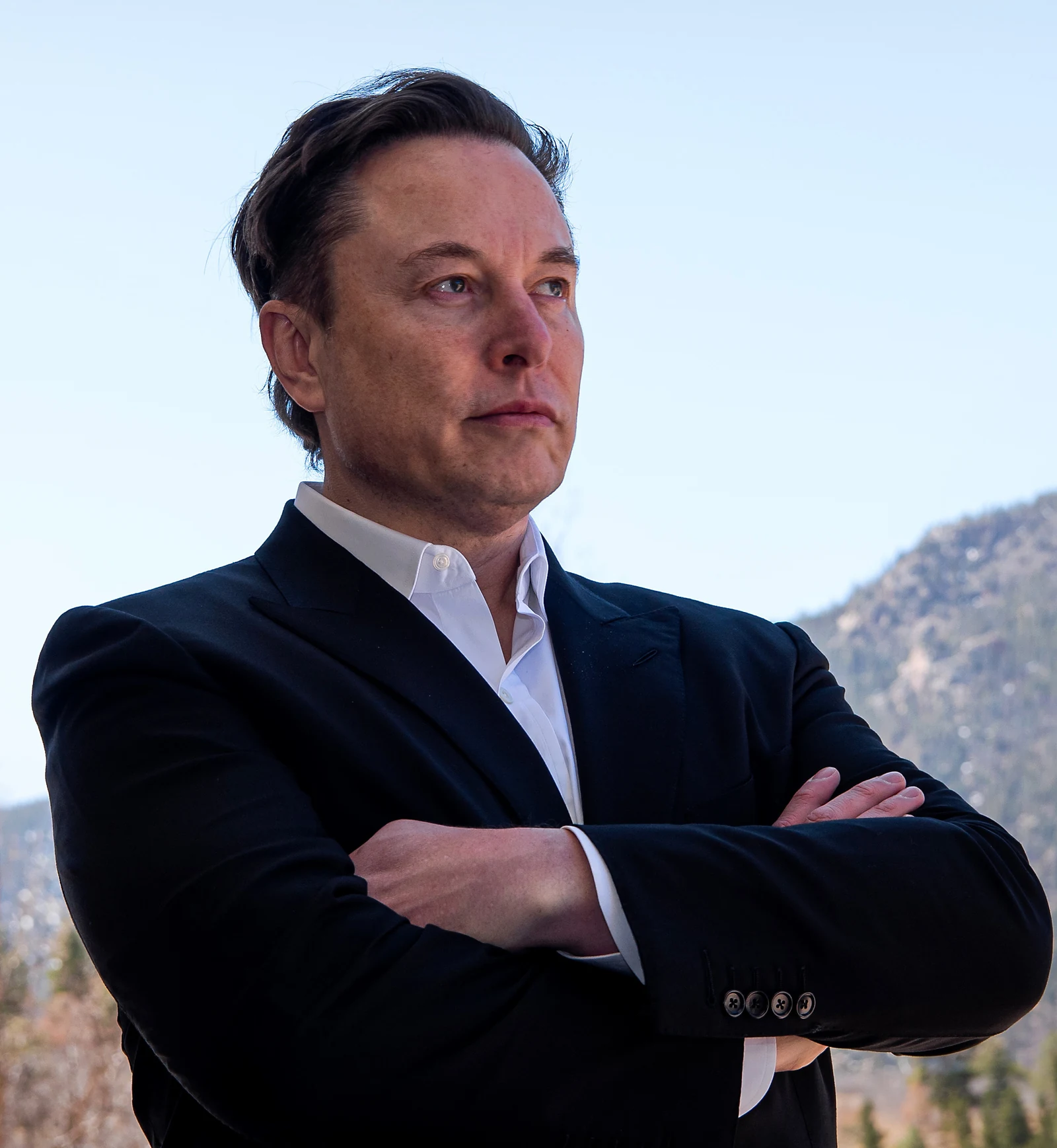
Elon Musk outside Arnold Hall at the U.S. Air Force Academy, Colorado Springs, on 7 April 2022; a genuine public-domain archive portrait for contextual coverage of a flying-car claim, not a flying-car photograph and not evidence of a current product. Photo: Trevor Cokley / U.S. Air Force Academy · Public domain in the United States as a U.S. Air Force official-duty photograph; DVIDS public-use notice applies. Proportionally resized and WebP-encoded; no content added.
The phrase “Musk flying car” is no longer based only on an old promise. On October 15, 2026, Tesla showed a Roadster prototype leaving a ramp, rotating in the air and landing with cold-gas thrusters at a SpaceX test site in Texas. Tesla also showed a jump over other vehicles. Those were real demonstrations in front of an audience, not an AI-generated clip. They were not a public-road launch, a certified aircraft flight or proof that a customer can buy and fly the car today. [1] [2] [3]
The precise description is narrower: Tesla demonstrated short, controlled airborne maneuvers and is marketing an invite-only “Rocket” version as able to fly. Production specifications, price, legal operating rules and repeatability with a human driver remain unsettled. A rocket-assisted hop is not the same as regulated aircraft flight.
Key Takeaways - Tesla’s October demo showed a Roadster prototype performing short airborne stunts with SpaceX-linked cold-gas thrusters. - Tesla says the invite-only Rocket trim can fly, but also says it is not approved for public-road use. [1] - Musk’s earlier SpaceX package idea was a promise about what the car might do, not proof that a production vehicle existed. - Consumer production is targeted for 2028; price, certification, India availability and delivery certainty are not established. [2] [3]
What happened at the 2026 Roadster reveal?
Tesla’s event was an engineering demonstration, not a vehicle handover. The prototype drove on an upside-down ramp using a multi-mode suction system, turned in the air and landed with built-in thrusters. It later jumped over a truck and other vehicles while twisting in the air. Tesla’s official livestream lists ramp, kickflip and acceleration demonstrations. [1] [4]
Tesla says fans and a ground seal pull air from beneath the car to create downforce, even holding it upside down when stationary. Cold-gas thrusters are presented as stabilizers in flight. That is different from sustained aircraft-style travel. [1]
The prototype carried no human during the demonstration. Musk said the autonomous run was done “to make sure we don’t kill anyone,” according to the Associated Press. AP also noted that the event did not answer how the vehicle would meet public-road or aviation rules. [2]
Snopes found that Tesla livestreamed the event before a live audience and that attendee videos corroborated the clips. Its key qualification was that the demo showed a short launch, controlled fall and rotation, not sustained longer-distance flight. It also remained unclear whether a final consumer car would retain the same capability. [3]
Is this the Roadster SpaceX package Musk promised?
Broadly, yes. This is the long-delayed second-generation Roadster associated with Musk’s SpaceX option package. In a 2018 post, Musk said the package would include about 10 small rocket thrusters arranged around the car. He said they could improve acceleration, top speed, braking and cornering, then added that they might even allow a Tesla to fly. The wording was speculative, not a delivery commitment. [3]
Tesla’s current product language is more direct. The standard Roadster is “road ready” for two people. The Thrust trim is “race ready,” with rear acceleration thrusters. The invite-only Rocket trim is “air ready,” seats one and adds a full flight system. Tesla says its thrusters support forward and upward acceleration and lateral rotation, then states: “So yes, it can fly.” The same page says the Rocket is not approved for public-road use. [1]
That wording creates an important dividing line. Musk’s earlier posts were claims about a future option. Tesla’s 2026 website is a current product description and reservation funnel. Neither establishes a certified aircraft, a completed production run or permission to take off from an ordinary street.
What is confirmed—and what is still promised?
Confirmed: Tesla held the event, showed a Roadster prototype performing short airborne maneuvers, and published claims about suction, active aerodynamics and cold-gas thrusters. Its reservation page lists Performance, Thrust and invite-only Rocket configurations. [1] [4]
Announced, not achieved as a customer product: Tesla says consumer production will begin in 2028. Reuters reports that the company did not provide a target price at the event, while AP says Tesla did not immediately set a price tag and that reservations carried no guarantee of delivery. [2] [5]
A changed target: The second-generation Roadster was first shown in 2017 with deliveries discussed for 2020. Reuters reports that Tesla now says the car can travel more than 300 miles on a charge, less than half the range Musk promised in 2017. That history does not prove the new claims false, but it is a reason to label dates and specifications as targets until production cars are independently delivered and tested. [5]
Not confirmed: No reviewed source establishes public-road approval for the Rocket, an aircraft certificate, a human-occupied flight, sustained route flight, India availability, a final retail price or a guaranteed 2028 delivery. The FAA told WIRED that the Tesla vehicle does not meet its definition of an aircraft, while aviation experts cited in the report said a machine leaving the ground would still raise major approval and operating questions. [6]
What should buyers watch next?
The next meaningful proof is not another dramatic clip. It is a repeatable test with a production-intent vehicle, clear operating limits, disclosed safety systems and a human-occupant demonstration under an appropriate regulatory framework. Until then, the Roadster is best understood as a road car with a rocket-assisted experimental mode, not a taxi that can legally leave traffic.
A reservation for the road-ready version does not automatically buy the invite-only Rocket system. Tesla’s reservation page lists payments due during the reservation process, but a deposit is not a delivered vehicle or proof that the flight system will be approved where a customer lives. [1]
None of the reviewed sources establishes Indian certification, sales, import approval, local pricing or a delivery schedule. Claims that the flying Roadster is “coming to India” are unsupported.
Frequently Asked Questions
Can the Tesla Roadster really fly?
Tesla says the invite-only Rocket trim can fly, and the October 2026 demonstration showed short airborne stunts. The event did not demonstrate sustained aircraft-style flight, and the Rocket is not approved for public-road use. [1] [3]
Is this a SpaceX car?
It is a Tesla Roadster using SpaceX-linked technology, not a SpaceX-branded passenger aircraft. [2] [5]
When will it launch, and how much will it cost?
Tesla and Musk have said consumer production is expected to begin in 2028. That is a target, not a guaranteed delivery date. A final retail price was not announced in the reviewed October 2026 reporting, and earlier Roadster pricing or reservation deposits should not be treated as a confirmed Rocket price. [1] [2] [5]
Bottom line
The “Musk flying car” story now has a real demonstration behind it, but the demonstrated fact is specific: a Tesla Roadster prototype used suction and cold-gas thrusters for brief, controlled airborne maneuvers. The larger promise—a safe, certifiable, customer-delivered flying car—has not been proven. Treat 2028 as Tesla’s target, the Rocket as invite-only and non-public-road, and claims about price, India or routine flight as unconfirmed until Tesla and regulators publish evidence.
Related reading on Verdvit
- Renault Duster Strong Hybrid India Launch: Price, Variants and 29km/l Claimed Mileage
- Technology news
Editorial metadata
SEO title: Tesla Flying Car? What Musk’s Roadster Demo Proved
Meta description: Tesla’s 2026 Roadster demo showed brief rocket-assisted airborne stunts—not a certified everyday flying car. See what is confirmed, promised and unknown.
Proposed canonical: https://verdvit.com/blog/musk-flying-car
Topic tags: Tesla Roadster, Elon Musk, flying car, SpaceX, electric vehicles
Review date: 19 October 2026.
Sources and attribution
[1] Tesla
Roadster product and reservation pages, accessed 19 October 2026 · Reviewed 19 October 2026.
[2] The Associated Press
Tesla’s new Roadster car can thrust itself in the air. But don’t expect to drive it anytime soon · Reviewed 19 October 2026.
[3] Snopes
Are videos of Tesla’s new “flying” car performing mid-air stunts real? · Reviewed 19 October 2026.
[4] Tesla
Roadster Event official livestream, 15 October 2026 · Reviewed 19 October 2026.
[5] Reuters
Tesla’s new Roadster turns in air with SpaceX thrusters, won’t land until 2028 · Reviewed 19 October 2026.
[6] WIRED
A Tesla Flying Car? I Don’t Know, Man · Reviewed 19 October 2026.
Source names and titles are shown for attribution; original source URLs are retained in the private research record.