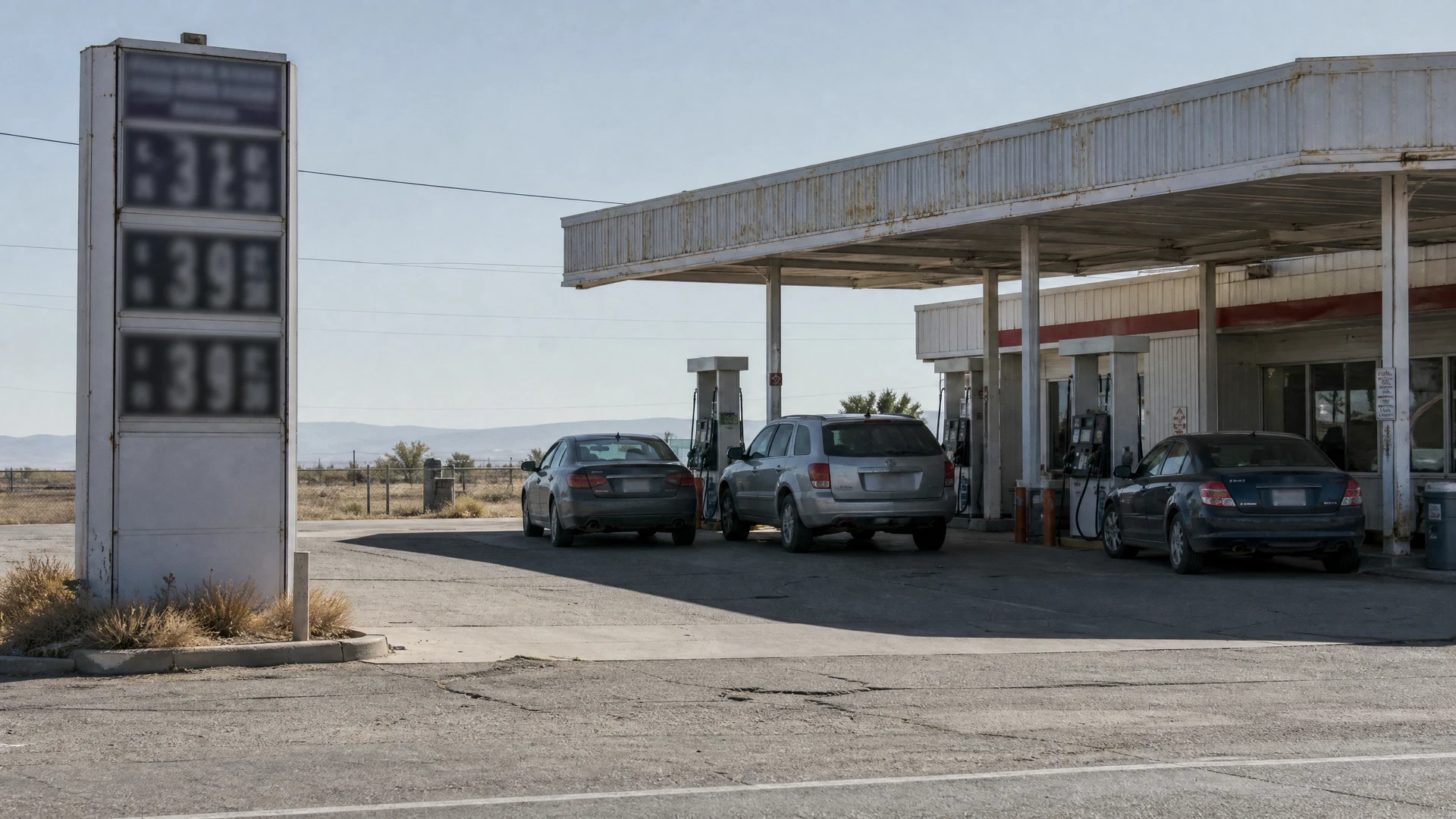
The U.S. national gasoline average was above $4 a gallon as Americans prepared for Labor Day weekend in 2026, according to Reuters and AAA. Reuters reported on September 5 that GasBuddy data showed the average at about $4.13 on September 3 and that analyst Patrick De Haan expected it to reach $4.03 on Labor Day, which would have exceeded the prior Labor Day record of $3.82 set in 2012. [1] AAA separately reported a $4.14 average on September 3 and said the holiday was on track to set a record. [2]
The status is no longer only a holiday story. The Energy Information Administration’s weekly data, released September 22, put the U.S. regular-gasoline average at $4.478 for the week ending September 21, up 15.9 cents from the prior week and $1.305 from a year earlier. [3] That reading does not replace the Labor Day measurement, but it confirms elevated prices continued after the event.
Key points
- Reuters said the national average was about $4.13 on September 3 and projected $4.03 for Labor Day; AAA reported $4.14 the same day. [1] [2]
- AAA identified $3.82, recorded in 2012, as the previous Labor Day record. [2]
- Reuters linked the rise to crude above $90 a barrel, high refinery utilization, lower inventories and strong exports of refined products. [1]
- EIA data showed a $4.478 U.S. weekly average for September 21, with the West Coast at $5.600 and the Gulf Coast at $3.972. [3]
- EIA’s January outlook had expected annual gasoline prices to fall in 2026, illustrating how quickly geopolitical and supply conditions changed the near-term picture. [4]
What happened before the holiday
Labor Day is a major late-summer travel period, so the timing made the price increase unusually visible. Reuters reported that gasoline prices were nearly a dollar higher than the previous year in GasBuddy’s September 3 reading. The report described the projected $4.03 Labor Day average as a possible holiday first, not an all-time gasoline record. [1] That distinction matters: the story concerned the highest Labor Day level and the unusual seasonal timing, not a claim that every historical U.S. pump-price record had been broken.
AAA’s September 3 release reached a similar conclusion using its own national-average tracking. It said the national average had risen four cents in a week and that the Labor Day average had never previously been above $4. The organization also noted that prices were rising even though gasoline demand normally eases at this point in the summer. [2]
Why crude, refining and inventories mattered
Crude oil is the largest single component of the retail gasoline price. EIA said in January that crude used at U.S. refineries represented slightly more than half of the retail average over the previous decade. [4] When crude rises, refiners generally face a higher feedstock cost before transportation, marketing and taxes are added to the pump price.
Reuters reported that crude moved back above $90 a barrel during the week before Labor Day as renewed military action involving the United States and Iran raised concern about interruptions to global supply. The report also cited attacks on Russian refining facilities as a source of concern for distillate supply and said refined-product exports from the United States were more than 10% above the prior year, according to EIA data cited by Reuters. [1]
Domestic production did not automatically translate into cheap gasoline. Reuters said U.S. refinery utilization was 98%, its highest level since 2018, while gasoline inventories had fallen by 1.2 million barrels to 205.7 million barrels. The article compared that stock level with an August five-year average of 217.6 million barrels. [1] High utilization shows refiners were running hard; lower inventories show that available supply could still be tight relative to demand and export needs.
Regional prices changed the consumer experience
A national average is a statistical summary, not a price paid by every driver. The EIA weekly table for September 21 showed a wide spread: the West Coast averaged $5.600 a gallon, while the Gulf Coast averaged $3.972. California was at $6.003, compared with $3.929 in Texas. [3] Those differences reflect local taxes, transportation costs, refinery configuration, environmental fuel requirements and each region’s access to supply.
Reuters identified California, Hawaii and Washington as the states with the highest average prices around Labor Day and said Colorado, Utah, Idaho, Montana, Wyoming and North Dakota had recorded some of the steepest increases since the conflict began. [1] The later EIA data likewise showed California at the top of its state table and the West Coast above every other Petroleum Administration for Defense District. [3]
Why it matters for households and the economy
Fuel is a highly visible household expense because many workers cannot easily avoid driving. Reuters interviewed motorists who were reducing travel or buying smaller amounts of gasoline as food and other costs also strained budgets. Those accounts are reported experiences, not a national survey, but they illustrate why a $4 threshold carries political and economic weight. [1]
The effect also reaches beyond gasoline. Reuters said diesel prices were setting a new record during the same week and that air travelers faced higher holiday fares, while AAA reported that public electric-vehicle charging averaged 42 cents per kilowatt-hour in its September 3 release. [1] [2] Higher transport-fuel costs can raise delivery and travel expenses even for households that do not take a long road trip.
What remains uncertain
The sources establish the price readings and the supply pressures, but they do not establish how long the surge will last. Retail prices can respond with a lag to changes in crude, wholesale fuel and inventories. The September 21 EIA average was higher than the pre-holiday readings, yet one weekly observation cannot determine whether prices have peaked. [3]
The geopolitical explanation is also conditional. Reuters described disruption risks around the Strait of Hormuz and Russian refineries, not a guaranteed volume loss or a permanent change in supply. [1] A ceasefire, restored shipping, lower crude prices or improved refinery and inventory conditions could ease prices; renewed disruptions could do the opposite. These are scenarios, not forecasts.
What happens next
The next useful checkpoints are the EIA’s weekly gasoline and diesel releases, updated retail averages and evidence of movement in crude prices, inventories, refinery operations and exports. EIA scheduled its next fuel-price release for September 29 after the September 22 publication. [3] Comparing those readings with the Labor Day baseline will show whether the post-holiday increase is reversing or becoming a broader autumn trend.
Longer-term expectations were more benign before the shock. In January, EIA forecast that annual U.S. retail gasoline prices would fall 6% in 2026 and said the forecast generally followed expected declines in global crude prices. It also warned that declining refinery capacity could offset some of that relief, especially on the West Coast. [4] The Labor Day episode therefore leaves two questions open: whether geopolitical conditions normalize enough for that annual view to reassert itself, and whether regional refining constraints keep local prices elevated even if national crude prices retreat.