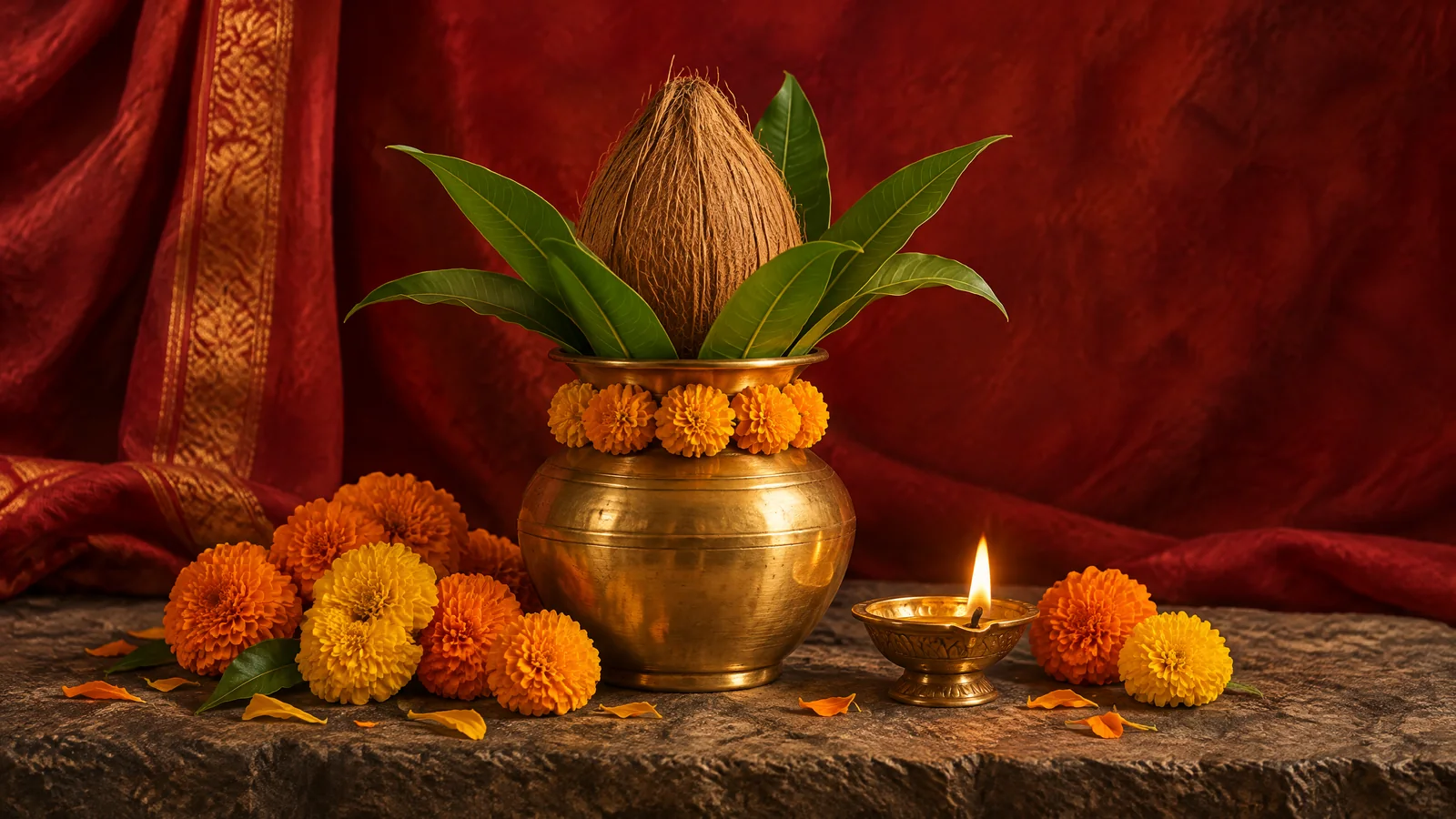
Sharad Navratri 2026 began on Sunday, October 11, and the first-day Ghatasthapana window listed for New Delhi was 6:19 am to 10:12 am. That morning muhurat has passed by the evening of October 11. The festival continues through October 19, followed by Vijayadashami, also known as Dussehra, on October 20. [1] [2]
Key points
- Sharad Navratri started on October 11, 2026, with Pratipada and Ghatasthapana.
- The New Delhi morning Ghatasthapana window was 6:19 am to 10:12 am and is now over.
- Local panchang timings can differ by city and sunrise calculations.
- The nine-day sequence runs through October 19, with Vijayadashami on October 20.
- Readers should use their own city’s panchang for later rituals and observances.
What happened
The festival date was a calendar question that required separating the tithi’s evening start from the day on which households observe the opening ritual. Times of India reported that Pratipada began at 9:19 pm on Saturday, October 10, in its New Delhi calculation, but continued through Sunday’s daytime. On that basis, Sharad Navratri was observed as beginning on October 11 rather than October 12. [2]
Drik Panchang’s 2026 calendar also places Day 1, Pratipada and Ghatasthapana on Sunday, October 11. It lists Shailputri Puja for the same date, followed by Brahmacharini Puja on October 12 and Chandraghanta Puja on October 13. [1] NDTV’s October 5 guide independently gave October 11 as the start date and October 19 as the end of the nine-day observance. [3]
The first-day installation is not an evening appointment that remains open after the morning. NDTV and Times of India both gave 6:19 am to 10:12 am as the main Ghatasthapana period under North Indian/New Delhi calculations. Times of India also listed an Abhijit Muhurat from 11:44 am to 12:31 pm, but readers checking the article on the evening of October 11 should understand that both windows have passed. [2] [3]
Why it matters
The distinction matters because searches for “Happy Navratri 2026” can mix greetings, calendar dates and ritual instructions. A greeting remains seasonally relevant, but a service article should not tell readers that the day-one muhurat is still available when the stated time has ended. The confirmed useful information now is the date sequence and the warning that timings are location-sensitive.
For readers planning ahead, the calendar gives a clear run of dates. Drik Panchang lists Day 2 on October 12, Day 3 on October 13, Day 4 on October 14, Day 5 on October 15, Day 6 on October 16 and Day 7 on October 17. It places Durga Ashtami on October 18 and Maha Navami on October 19, before Vijayadashami on October 20. [1] NDTV confirms the broad sequence through October 19 and the Dussehra date, while Times of India notes that some tithis can create confusion when they cross dates. [2] [3]
The practical point is not that one online calendar can replace every local tradition. It is that readers need to distinguish a festival’s widely reported date from the exact time for a ritual in a particular city. Sunrise, location and the panchang calculation used by a family can affect the local answer.
The nine-day calendar
Day Date Observance listed by the calendar 1 October 11 Pratipada, Ghatasthapana, Shailputri Puja 2 October 12 Dwitiya, Brahmacharini Puja 3 October 13 Tritiya, Chandraghanta Puja 4 October 14 Chaturthi, Kushmanda Puja 5 October 15 Panchami, Skandamata Puja 6 October 16 Shashthi, Katyayani Puja 7 October 17 Saptami, Kalaratri Puja 8 October 18 Ashtami, Durga Ashtami 9 October 19 Navami, Maha Navami 10 October 20 Vijayadashami/DussehraThis table follows Drik Panchang’s dated 2026 sequence. The site displays a Houston default in the fetched view and warns that its displayed timings are local to that location, so the table is being used for dates and observances, not as a substitute for an India-city clock. [1]
What remains uncertain
The exact timing for a reader outside New Delhi remains unresolved by the sources used here. NDTV calls the 6:19 am–10:12 am period a North Indian Panchang calculation and says minor variations may apply with the city’s sunrise. Times of India gives the same Delhi window and advises families in other cities to confirm local timing. [2] [3] No single nationwide clock should therefore be presented as the ritual time for every household.
The sources also do not establish a government notification, a nationwide public-holiday decision or changes to local celebrations. This is a calendar and service update, not a report of a newly announced public event. The trend signal supplied for the selection was a search-interest snapshot, not evidence that the festival date changed or that a particular celebration took place. The morning muhurat is a past event as of the evening reporting cutoff.
What happens next
The next dated observances in the supplied calendar are Brahmacharini Puja on October 12 and Chandraghanta Puja on October 13. Readers should check a trusted local panchang before acting on a time, especially when planning a ritual that depends on sunrise or a tithi boundary. [1] [2]
The sequence moves toward Durga Ashtami on October 18, Maha Navami on October 19 and Vijayadashami on October 20. Drik Panchang lists Sandhi Puja beginning at 11:57 pm on October 18 and ending at 12:45 am on October 19 in the page’s displayed local setting; that timing should not be transplanted to Indian cities without a local calculation. [1]
For now, the accurate evening update is simple: Navratri 2026 has begun, the first-day New Delhi Ghatasthapana window has passed, and the remaining dates should be read with city-specific timing in mind. This article is factual festival guidance, not religious, medical or legal advice.