 VERDVIT
Vaishnavi Sharma Takes Four as India Seal Zimbabwe ODI Series
India seal the Zimbabwe ODI series after Harmanpreet and Deepti score centuries and Vaishnavi Sharma takes 4/39 in a 121-run Vadodara win.
Vaishnavi Sharma's four wickets helped India turn two major batting performances into a series-clinching victory over Zimbabwe. Harmanpreet Kaur made 126 and Deepti Sharma finished unbeaten on 106 before India won the second women's ODI by 121 runs in Vadodara on 25 October 2026.
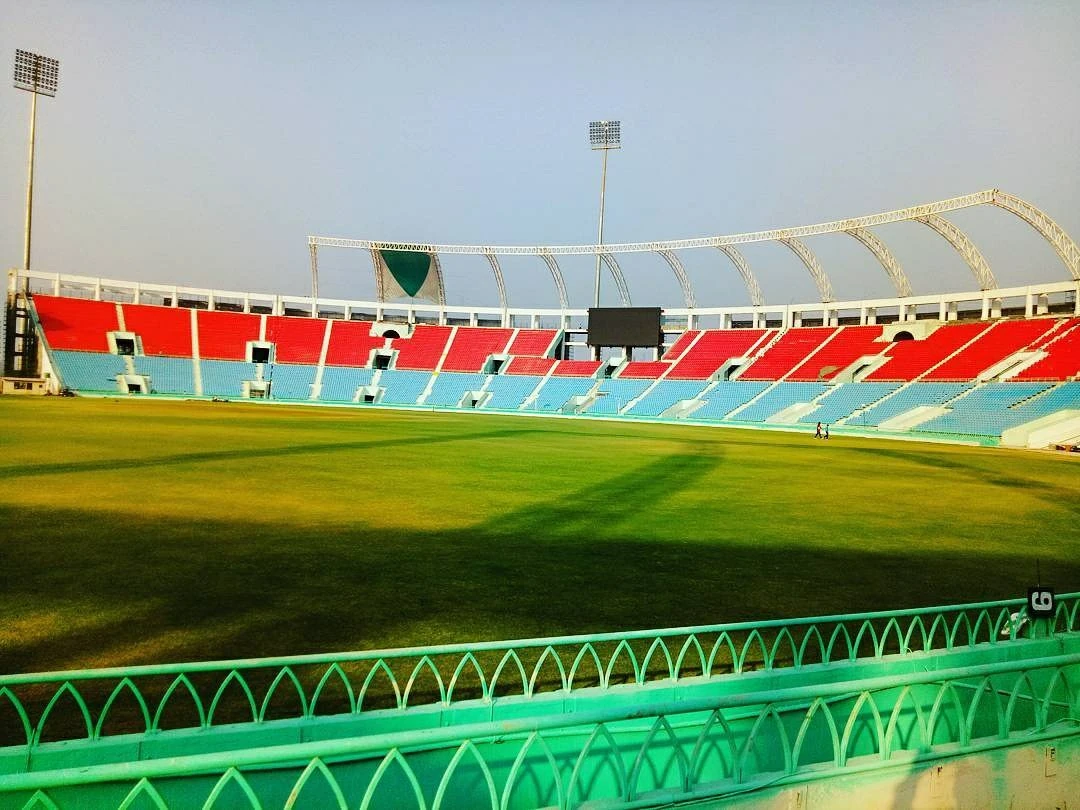
Lucknow International Cricket Stadium, photographed by Wikiboy2364 in2017. Real archive illustration of Indian cricket; not BCA Stadium, Vaishnavi Sharma or the25October2026 match. CC BY-SA 4.0.
The result gave India an unassailable 2–0 lead in the three-match series. It was a match with more substance than the final margin alone suggests: Zimbabwe created early openings, India's experienced middle order repaired the innings, and a young spinner made her opportunity count when the visitors tried to build a response.
Key Takeaways - India made 328/6 in 50 overs; Zimbabwe were bowled out for 207 in 48.5 overs. - Harmanpreet scored 126 from 121 balls and Deepti made 106 not out from 86. - Vaishnavi finished with 4/39, providing the decisive middle-overs contribution with the ball. - India secured the three-match ODI series, but the remaining match was not already decided by this result.
The result and the match that it belongs to
This was the second ODI of Zimbabwe Women's tour of India, played at the BCA Stadium in Vadodara. India won by runs because they batted first and defended their total; the outcome should not be confused with a successful chase or a T20I result. The completed Cricinfo report and India Today's dated account agree on the two final totals and the 121-run margin.
The series position matters as much as the day's score. A 2–0 lead in a three-match series means the leading side cannot be overtaken, although the final fixture still has its own result to determine. Calling the series sealed is therefore accurate. Calling it an ODI clean sweep at this stage would not be.
For readers following several competitions at once, the date and format are useful anchors. This report covers the completed 25 October match, not the earlier opening ODI or a prediction about India's next tour. Its analysis explains the performances recorded in this match rather than projecting selection decisions or future scores.
Zimbabwe’s early wickets made the recovery necessary
India did not reach their large total through an uninterrupted opening partnership. Smriti Mandhana and Shafali Verma fell early, leaving the hosts at 19/2. That opening gave Zimbabwe a genuine opportunity to put pressure on the middle order and made the next partnership important to the direction of the innings.
Harmanpreet and Pratika Rawal provided the first repair. Rawal scored 61 from 67 balls, while Harmanpreet stayed in to carry the innings beyond that initial recovery. Their contribution mattered because a batting side that loses early wickets has two jobs: stop the immediate collapse and retain enough scoring potential for the later overs.
Zimbabwe then interrupted the rebuilding with further dismissals, including Rawal and Tejal Hasabnis. The published reports differ on some intermediate scoreboard and partnership details. Those disputed figures are not necessary to explain the match, so this account uses the agreed final scores rather than presenting an uncertain intermediate number as settled fact.
Harmanpreet gave India continuity through the innings
Harmanpreet's 126 from 121 deliveries was the substantial innings around which India's recovery developed. She was involved in both the first rebuilding phase and the later partnership with Deepti. Remaining at the crease through those transitions gave India continuity even when the batting order changed around her.
Cricinfo's completed match page identifies Harmanpreet as Player of the Match. That recognition fits the recorded contribution: her century helped convert an innings under early pressure into a total Zimbabwe had to chase at a demanding level. The award is a match-specific fact, not a claim that the other performances were secondary or unimportant.
The useful distinction is between anchoring and simply batting slowly. An established batter can allow a partner to expand the scoring while continuing to find runs herself. Here, the eventual total and the two individual centuries show that stability and scoring were complementary parts of the same recovery, not competing objectives.
Deepti’s unbeaten century added a second source of runs
Deepti finished on 106 not out from 86 balls. Her innings gave India a second large contribution after the early wickets and ensured that the batting effort was not dependent on Harmanpreet alone. An unbeaten score also tells the reader she remained available to score through the end of India's innings.
The match reports describe Deepti using sweeps and other scoring options against the bowling. This is a paraphrase of reported match action, not a first-hand technical assessment based on private video or telemetry. Her final score is the more important confirmed fact for understanding how India reached 328/6.
Deepti also took three wickets during Zimbabwe's reply. That combination of a century and a three-wicket contribution makes her role broader than a batting highlight. It gave India support in both innings and helped finish a bowling effort that had already been shaped by Vaishnavi's breakthroughs.
Zimbabwe’s response included meaningful resistance
Zimbabwe's chase was not without individual contributions. Modester Mupachikwa made 49 and Chipo Mugeri-Tiripano scored 46, giving the visitors resistance before India's bowlers separated the batting partnerships. Neither reached a half-century, but their scores help explain why the chase extended into the 49th over.
A large target changes the meaning of survival. Keeping wickets in hand is useful, but a chasing side must also keep its scoring sufficiently close to what the target requires. The reports describe the required rate rising as India made progress with the ball. The eventual 207 all out shows that Zimbabwe could not sustain the chase to its target of 329.
This does not require dismissing the visiting side's effort. A match report can acknowledge the phases in which Zimbabwe competed while explaining why those phases were not enough to reverse the result. The early wickets and the two near-fifties are part of the same completed match as India's commanding final margin.
Why Vaishnavi’s four wickets attracted attention
Vaishnavi's 4/39 gave the match a clear young-player storyline alongside the established batters' centuries. The completed Cricinfo account identifies this as only her second ODI. Her spell removed Mupachikwa, Beloved Biza, Michelle Mavunga and Josephine Nkomo, breaking into the batting group Zimbabwe needed for a sustained chase.
Those wickets were valuable for their placement in the innings, not just their number. Removing batters after they have begun to establish themselves interrupts the rebuilding process and leaves the next player with the same large target but fewer partners available. That is the tactical significance of a middle-overs wicket-taking spell in a chase of this size.
Four wickets in one match are evidence of a strong performance here. They are not enough, on their own, to guarantee a permanent role, a particular future selection or a career record. Keeping that distinction clear lets readers appreciate the performance without turning an accurate match story into an unsupported prediction.
What the series win establishes
India's result brought together three different contributions: Harmanpreet's continuity with the bat, Deepti's runs and wickets, and Vaishnavi's four-wicket spell. The series was secured through those combined efforts rather than through a single isolated moment. That is the most useful reading of the completed scoreboard.
The final ODI still remained to be played at the point covered by this report. For continuing coverage, follow Verdvit's latest articles, where new reports should be read with their own dates and completed results. This page remains a dated account of the Vadodara second ODI, not a live score service or a promise about what comes next.
Reporting and image notes
Verified completed event record
The completed Cricinfo second-ODI match report and the dated India Today account were opened. Both support India 328/6, Zimbabwe 207 in 48.5 overs, the 121-run win, Harmanpreet 126 from 121 balls, Deepti 106 not out from 86 and Vaishnavi 4/39. India led the three-match series 2–0. Conflicting intermediate totals, partnership totals and milestone delivery counts are excluded. Exact source URLs are retained in Verdvit’s private editorial record.
Reporting and analysis limits
Cricinfo identifies Harmanpreet as Player of the Match and supports the batting recovery, Rawal’s 61, the two near-fifties and Vaishnavi’s dismissals. Tactical paragraphs are Verdvit’s explanatory analysis, not first-hand reporting or a forecast of selection, careers or the last ODI. No invented quotes or clean-sweep claim. Exact source URLs are retained in Verdvit’s private editorial record.
Image attribution
Lucknow International Cricket Stadium, photographed by Wikiboy2364 in2017. Real archive illustration of Indian cricket; not BCA Stadium, Vaishnavi Sharma or the25October2026 match. CC BY-SA 4.0. Original source and licence are retained in the provenance record. Verdvit proportionately re-encoded this photograph to WebP without a crop or added content. No current event, product identity or endorsement is implied.