 VERDVIT
Hyundai Bayon Launches in India: Price, Petrol Engine and AI Features Explained
Hyundai Bayon is reported launched in India at approximately Rs 10 lakh ex-showroom. Read the petrol specifications, AI and connected features, and untested limits.
Hyundai's Bayon has moved from an announced India launch to a reported market introduction on 26 October 2026, with an entry ex-showroom price of approximately ₹10 lakh. The important detail is not simply the price: the India-specification vehicle combines a 1.5-litre petrol engine with a technology package that needs to be read carefully, feature by feature and variant by variant.
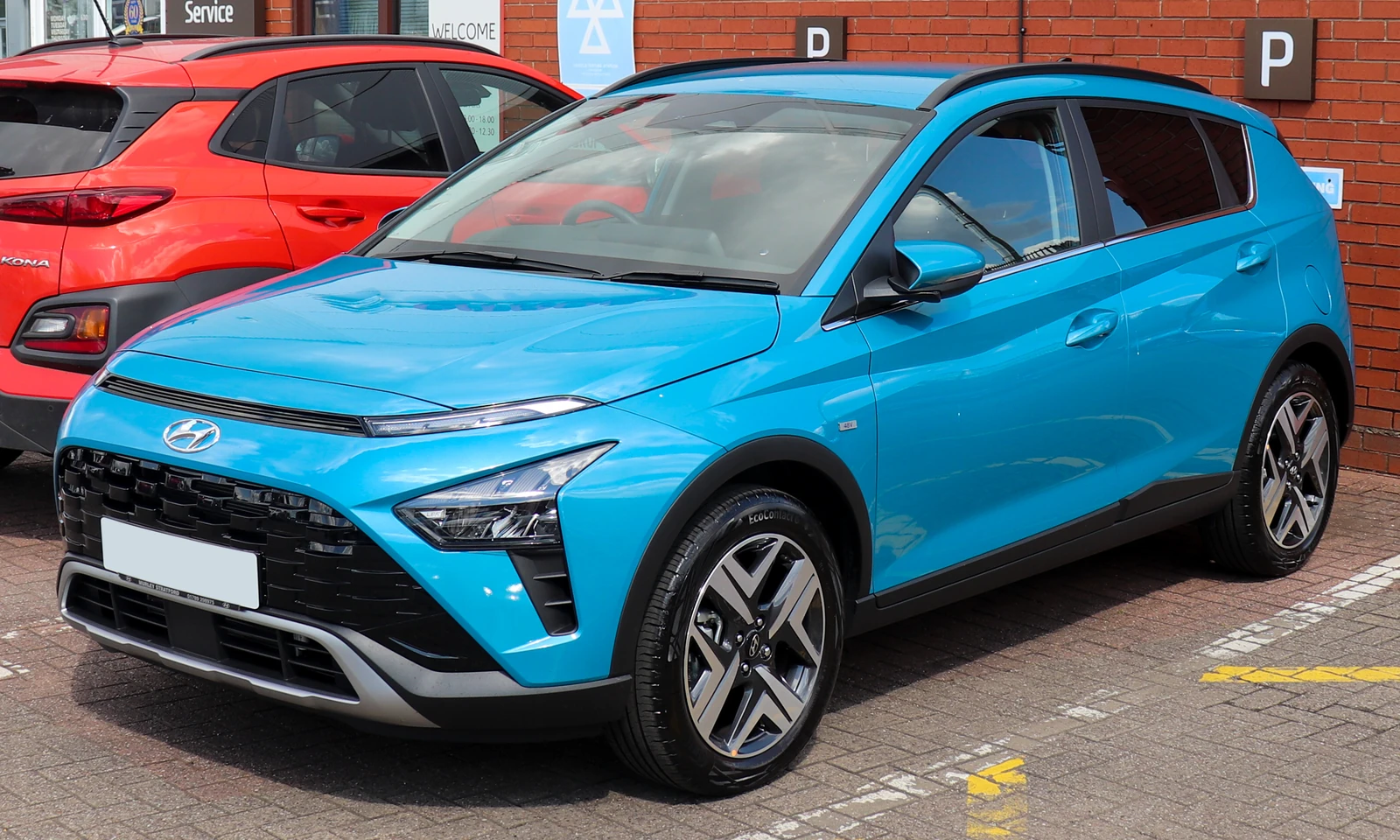
A 2021 European Hyundai Bayon photographed in Stratford-upon-Avon by Vauxford. Real archive model-history illustration; not the 2026 India-spec Bayon or its launch event. Proportionally resized and WebP re-encoded; CC BY-SA 4.0. CC BY-SA 4.0.
CarDekho's launch report, published on 26 October, supplies the current launch and starting-price information. Hyundai's earlier 12 October announcement explains the India-specification engine, digital cockpit and connected functions. Reading them together avoids confusing an older European Bayon with the newly introduced Indian vehicle—or treating a pre-launch specification as an independent road test.
Key Takeaways - CarDekho reports the India launch on 26 October and an entry ex-showroom price of approximately ₹10 lakh. - Hyundai specifies a 1.5-litre MPi petrol engine producing 115 PS and 144 Nm, with manual or IVT transmission. - AI voice interaction, connected features and software updates are manufacturer-described capabilities, not independently verified performance claims. - The archive photograph shows a European 2021 Bayon, not the 2026 India-spec model or its launch event.
What the launch price does and does not tell you
The reported starting figure belongs to the entry vehicle and is an ex-showroom price. It is not a universal drive-away amount. Registration, applicable insurance, location-specific charges and the selected specification can change the final quotation. A headline starting price therefore cannot establish what every version will cost in every Indian city.
There is also a reason this report does not reproduce a complete variant price table. The opened launch article lists multiple versions but leaves several prices to be announced, while other current overview material is not fully consistent about their availability. Presenting a guessed maximum price or completing those gaps would turn a useful news update into misinformation.
The reliable starting point is consequently narrow: a dated launch report and an approximately ₹10 lakh entry ex-showroom figure. This article is an explanation of that announcement, not a booking service, dealership recommendation or claim that a particular offer will remain available. A later revised price list should be treated as a separate dated update.
The India engine is not the older European engine
Hyundai's primary announcement specifies a four-cylinder, 1.5-litre MPi petrol engine with 115 PS and 144 Nm. Its stated transmission choices are a six-speed manual and an Intelligent Variable Transmission, abbreviated IVT. These are the Indian specifications described by the manufacturer, rather than specifications inferred from the car's name or the archive image.
That distinction matters because the Bayon badge has appeared on other market configurations. The photograph accompanying this page shows a 2021 European Premium T-GDi MHEV model. Its visible design and historical model description should not be used to infer the Indian vehicle's engine, cabin equipment or dimensions.
Power and torque figures describe specified output; they do not establish real-world acceleration, refinement or fuel consumption on Indian roads. Verdvit has not conducted a road test of this vehicle. This report therefore does not award it a performance ranking, promise a mileage figure or claim that manual and automatic versions will feel identical in everyday use.
What Hyundai means by an AI voice assistant
The manufacturer describes its first Generative AI Voice Assistant for this India-specification vehicle, with intelligence from Perplexity and voice AI powered by SoundHound AI. Its stated purpose is more natural conversation, rather than requiring every request to fit a short predefined command. That is an announced interface capability, not proof that every spoken question will be understood accurately.
Hyundai also identifies an NVIDIA-accelerated Connected Car Navigation Cockpit, or ccNC. For a reader, the useful distinction is between the computing and interaction system and the mechanical functions of the vehicle. An advanced infotainment interface should not be confused with a self-driving system or permission to reduce attention to the road.
Voice systems can also involve different kinds of commands and information requests. Some capabilities may depend on configuration or connectivity. The launch claims alone do not establish their response speed or reliability in every environment. Drivers should continue to use the vehicle's controls and instructions safely; a more conversational screen does not remove responsibility for driving.
Languages and screens need precise wording
The earlier primary announcement describes a multi-language user interface supporting ten regional and two international languages. It separately identifies more than 500 embedded voice commands in English, Hindi, Tamil, Bengali, Telugu and Hinglish. These statements concern different parts of the interface and should not be merged into a single unsupported language count.
This is why the article does not adopt a secondary claim about 23 regional languages. Where opened sources use different numbers or definitions, the primary announcement's exact description is more useful than an inflated combined total. It also avoids promising that every conversational AI function is available in every interface language.
Hyundai describes dual 12.3-inch curved displays for the cockpit. The presence of an announced digital configuration does not mean every entry-price version necessarily carries every screen, audio or convenience feature mentioned in promotional material. A vehicle's precise variant specification is the appropriate place to establish what is fitted, rather than a broad launch headline.
Connected features and software updates are separate claims
Hyundai says the Bayon supports more than 70 Bluelink connected features and controller over-the-air updates for up to 19 controllers. Over-the-air updating means supported software can be enhanced remotely under the manufacturer's stated conditions. It does not mean every component can be repaired remotely, or that physical servicing becomes unnecessary.
The words "up to" are important. They describe a maximum within the announced system, not a promise that all configurations will expose exactly the same number of functions. Connected services, update coverage and actual vehicle equipment should be checked separately instead of being assumed from one marketing total.
There is a practical security angle as well. Connected-car accounts and authorised software-update procedures deserve the same care as other personal digital accounts. Unsolicited messages claiming to activate features or demanding a password should not be treated as official simply because they use a car brand's name. That is general account-safety guidance, not an allegation about Hyundai's systems.
Features are not an independent safety verdict
A manufacturer's equipment announcement and an independent vehicle safety result answer different questions. Features describe what is offered; a test evaluates performance under a defined procedure. This report has not verified a current independent crash-rating result for the India-spec Bayon and does not invent one.
Driver-assistance technology should likewise not be treated as an accident-prevention guarantee. Availability can be trim-dependent, and operating limits still matter. A launch article can explain a feature without declaring that it will work in every road, weather or traffic condition.
For readers following India's mobility news, the significant development is the combination of a familiar petrol specification and a stronger emphasis on connected software. Whether the combination works well in everyday use requires subsequent evidence, including exact variant information and properly described independent testing. Neither the launch price nor the AI branding answers that question by itself.
The clear takeaway from the 26 October launch
The current announcement supports a straightforward summary: the Bayon has been reported launched in India, its entry ex-showroom price is approximately ₹10 lakh, and Hyundai's India specifications describe a 1.5-litre petrol vehicle with manual or IVT choice and an extensive digital-interface package. Missing variant prices and untested performance should remain missing, not be filled with guesses.
The real image is included for model-history context with its date, creator and reuse licence visible. It is deliberately not presented as a new launch photograph. That keeps the article useful without borrowing an uncleared press image or implying attendance at the event.
For more source-labelled updates, explore Verdvit's blog reading hub and the latest news homepage. Future changes to pricing, equipment or tested performance should be read as fresh, separately dated information rather than silently attached to this launch snapshot.
Reporting and image notes
Dated India launch report, 26 October 2026
CarDekho’s full launch report was opened: published 26 October 2026 at 13:00 IST and updated at 13:03. It supports the launch and approximately Rs 10 lakh entry ex-showroom price. A complete unambiguous variant table was not available; gaps and inconsistent overview prices are not filled in. Ex-showroom is not a universal on-road quotation. Exact source URLs are retained in Verdvit’s private editorial record.
Hyundai India specification announcement, 12 October 2026
Hyundai’s primary India-spec announcement was opened. It specifies the 1.5-litre MPi petrol engine, 115 PS/144 Nm, manual or IVT, dual screens, described AI/cockpit providers, 10 regional plus 2 international interface languages, more than 500 commands in six named languages, over 70 connected features and updates for up to 19 controllers. These are manufacturer specifications, not an independent test or entry-trim guarantee. Conflicting secondary language counts, mileage and safety ratings are excluded. Exact source URLs are retained in Verdvit’s private editorial record.
Image attribution
A 2021 European Hyundai Bayon photographed in Stratford-upon-Avon by Vauxford. Real archive model-history illustration; not the 2026 India-spec Bayon or its launch event. Proportionally resized and WebP re-encoded; CC BY-SA 4.0. CC BY-SA 4.0. Original source and licence are retained in the provenance record. Verdvit proportionately re-encoded this photograph to WebP without a crop or added content. No current event, product identity or endorsement is implied.