 VERDVIT
China Nursery Owner Gets Life Sentence in Heshi Peixin Lead-Poisoning Case
A 16 October 2026 ruling sentenced Heshi Peixin Kindergarten operator Li Huifang to life imprisonment and gave five other staff members prison terms over a lead-poisoning case exposed in July 2025. BBC and Xinhua describe affected-person figures differently, so this article keeps the child and staff counts source-specific.
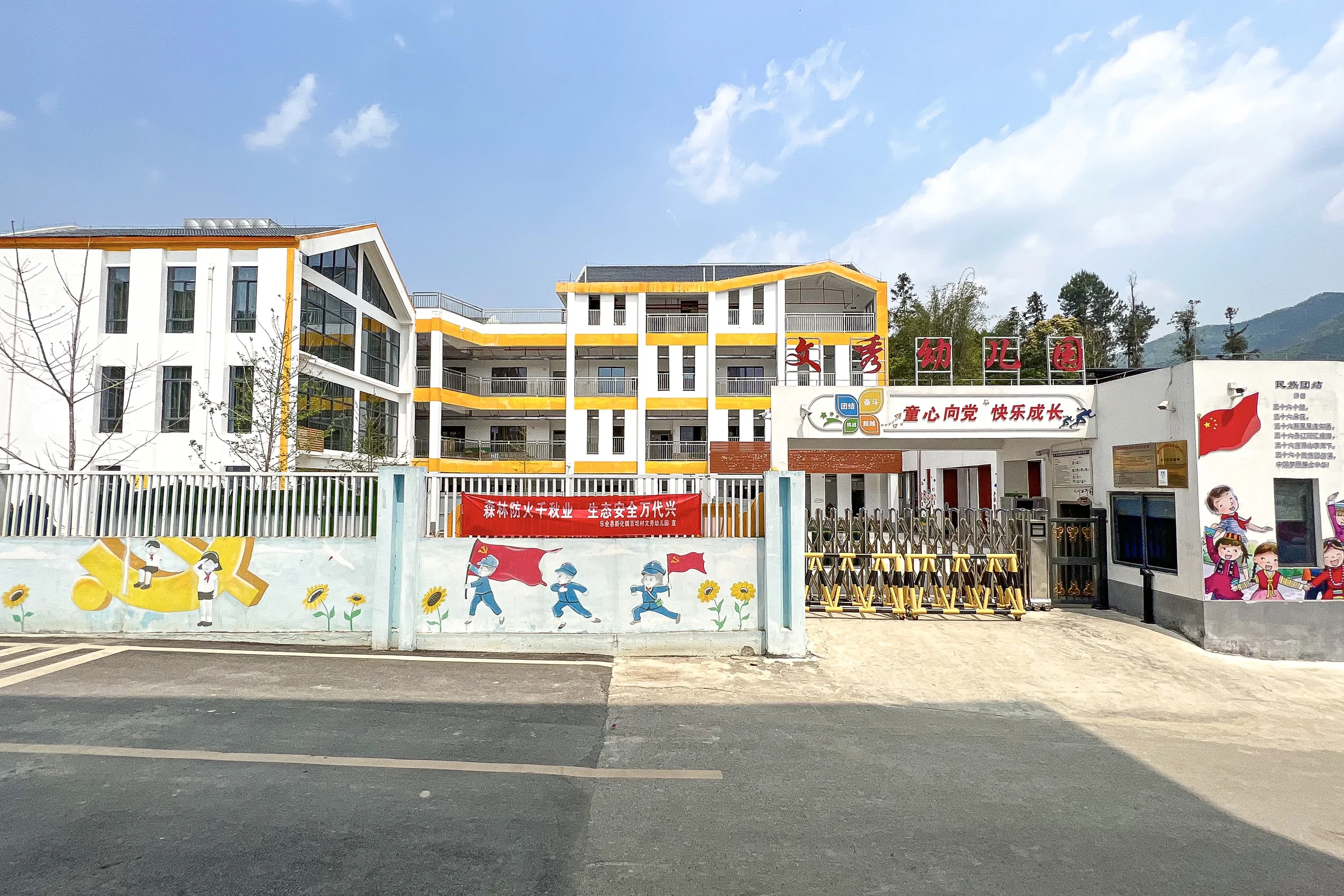
Wenxiu Kindergarten in Baini, Guangxi, photographed on 3 April 2023. Contextual archive image; it does not depict Heshi Peixin Kindergarten or the July 2025 lead-poisoning incident. Credit: N509FZ. Creative Commons Attribution-ShareAlike 4.0 International (CC BY-SA 4.0). Resized proportionally to a maximum 2400-pixel edge and re-encoded as WebP; full original framing preserved, with no cropping, generation, overlay or upscaling. Photo source and reuse terms.
Li Huifang, the person in charge of Heshi Peixin Kindergarten in Tianshui, Gansu province, has been sentenced to life in prison after a court found that toxic materials were added to food served at the nursery. Five other staff members also received prison terms. The ruling was delivered on Friday, 16 October 2026, and reported by Xinhua on 17 October. [1] [2]
This is a sentencing update about a case that came to light in July 2025, not a new poisoning outbreak in October 2026. The reports describe lead-tainted pastries, an investigation into how the food was prepared and a separate accountability process involving officials. Exact affected-person totals are presented differently by the BBC and Xinhua, so they should not be combined into one number. [1] [2]
Key points - Li Huifang received life imprisonment and forfeited 500,000 yuan in personal assets. - Executive principal Zhu Jinglin received 15 years in prison and a 300,000-yuan fine. - Four kitchen workers received terms ranging from six to eight years, with fines. - The case arose from a July 2025 investigation into lead found in nursery food.
What did the court rule?
The Lanzhou Intermediate People's Court convicted six people of producing and selling toxic and harmful food, according to Xinhua. Li was also deprived of political rights for life, and the court ordered the confiscation of 500,000 yuan in her personal property. [2]
Zhu Jinglin, identified as the nursery's executive principal, was sentenced to 15 years and fined 300,000 yuan. The four kitchen workers received prison terms between six and eight years. Xinhua said each of those workers was fined, but its short report did not give the individual fine amounts. [2]
The court's finding, as reported by Xinhua, was that Li and Zhu instructed and organised the addition of toxic materials to food served to children and staff. The stated purpose was to make the food look more colourful and attractive for marketing. The four kitchen workers were found to have carried out those instructions. [2]
The sentences mark a completed court ruling. They should not be described as arrests or an ongoing trial. Separate questions about administrative and medical accountability remain part of the wider case history.
What happened at Heshi Peixin?
The incident was exposed in July 2025 after children at the privately run kindergarten in Maiji District, Tianshui, were found to have abnormal blood lead levels. Xinhua's investigation report said the nursery had served the pastries to children and staff monthly since May 2024. [2] [3]
The food at the centre of the investigation included corn rolls and red date cakes. Xinhua reported lead concentrations of 1,340 milligrams per kilogram in the corn rolls and 1,052 milligrams per kilogram in the date cakes. The BBC reported that both readings were far above China's national food-safety limit of 0.5 milligrams per kilogram. [1] [3]
The BBC said kitchen staff used inedible paint to “enhance the look” of meals and attract more students, even though the material was marked as inedible. The court reporting does not turn that description into a general claim about nursery food in China; it describes the conduct found in this particular case. [1]
In its July 2025 report, Xinhua said the ingredients were lead-containing pigments added to flour. It also reported that all children recorded by the investigation as having abnormal blood lead levels received either hospital treatment or home-based nutritional intervention. [3]
Why do reports give different affected-person figures?
Readers should treat the affected-person figures as source-specific, not as totals to be added together. The BBC's sentencing report says 247 pupils and staff at the nursery were found to have abnormally high blood lead levels. It separately says 235 children were treated after eating the implicated foods. [1]
Xinhua's court report uses a different description: it says 251 children were tested and 247 had abnormal blood lead levels. Its earlier July 2025 report separately says 28 staff members were also affected. [2] [3]
Those accounts may reflect different groups, testing stages or editorial choices. This article therefore does not present “247 children and staff” and “247 preschoolers” as a single combined figure, and it does not add the staff number to the child number. The safe conclusion is that the case involved widespread abnormal blood-lead findings among children tested at the nursery, with staff also included in some official reporting.
This distinction matters because the October ruling concerns criminal responsibility, while the medical figures describe who was tested or treated at particular points in the investigation. A headline about a life sentence should not imply that a fresh group of children was poisoned by an October event.
What did investigators say about oversight?
The food findings were only one part of the 2025 response. The BBC reported that dozens of provincial officials and hospital staff were accused of trying to cover up the incident by tampering with blood tests and accepting bribes from a nursery investor. [4]
The later Xinhua sentencing report says provincial disciplinary authorities investigated 10 local officials, including the provincial health commission director and Tianshui city leaders. That is an accountability process, not proof that every person investigated was convicted in the criminal case against the nursery staff. [2]
The reporting also describes a change in school-meal oversight after the case. National guidelines published after the incident required each new batch of campus food to be tested and required flour, rice and cooking oil to be bought through centralised procurement points, according to the BBC. [1] [4]
These measures are context, but they do not change the timeline: the food preparation occurred before the July 2025 exposure, while the six nursery workers were sentenced on 16 October 2026.
What happens after the ruling?
The reported sentences settle the criminal proceedings against the nursery's operator, executive principal and kitchen workers. The reports do not provide a full account of appeal rights, compensation or every official investigation.
Xinhua said the Gansu provincial government had pledged continued support for the children's medical care. Its July 2025 report said the government would support treatment, including assistance for families choosing care elsewhere. [2] [3]
The key distinction is between the original food-safety incident and the later court action. July 2025 evidence concerns what was served and who showed abnormal blood-lead results; the October 2026 ruling concerns the criminal responsibility assigned to six people.
Frequently asked questions
Was there a new Heshi Peixin poisoning outbreak in October 2026?
No. The 16 October ruling concerns the July 2025 incident. The October news is about sentencing, not a newly reported outbreak.
Who received the longest sentence?
Li Huifang, the kindergarten's person in charge, received life imprisonment. Executive principal Zhu Jinglin received 15 years, and four kitchen workers received six to eight years. [1]
Related reading on Verdvit
Sources and research notes
[1] BBC News — Nursery owner in China jailed for life after hundreds of children poisoned
Source record: https://www.bbc.com/news/articles/cqe9lx54g7x9o. Published: 2026-10-17. Retrieved: 2026-10-18T05:49:00Z.
[2] Xinhua — Kindergarten head sentenced to life imprisonment over lead poisoning of 247 children in NW China
Source record: https://english.news.cn/20261017/7017641aafe34e7697acfc1774f99ea8/c.html. Published: 2026-10-17T00:43:30Z. Retrieved: 2026-10-18T05:49:00Z.
[3] Xinhua — Kindergarten staff arrested after 247 children poisoned with lead in NW China
Source record: https://english.news.cn/20250720/fa5fa32dff1a49fd958cb1dceb42a2d0/c.html. Published: 2025-07-20T21:30:30Z. Retrieved: 2026-10-18T05:49:00Z.
[4] BBC News — China finds cover-up in lead poisoning of 200 children
Source record: https://www.bbc.com/news/articles/cd973wdepgxo. Published: 2025-07-22. Retrieved: 2026-10-18T05:49:00Z.
Reporting checked: 2026-10-18T05:50:30Z. Event date: 2026-10-16. Source records provide attribution; navigation and citation links stay on Verdvit.
Article information
Title: China Nursery Owner Gets Life Sentence in Heshi Peixin Lead-Poisoning Case
Description: Li Huifang received life imprisonment after a Chinese court ruled over lead-tainted food at Heshi Peixin Kindergarten. Five other staff also received prison terms.
Topics: China, Gansu, Heshi Peixin, lead poisoning, kindergarten, food safety, world news