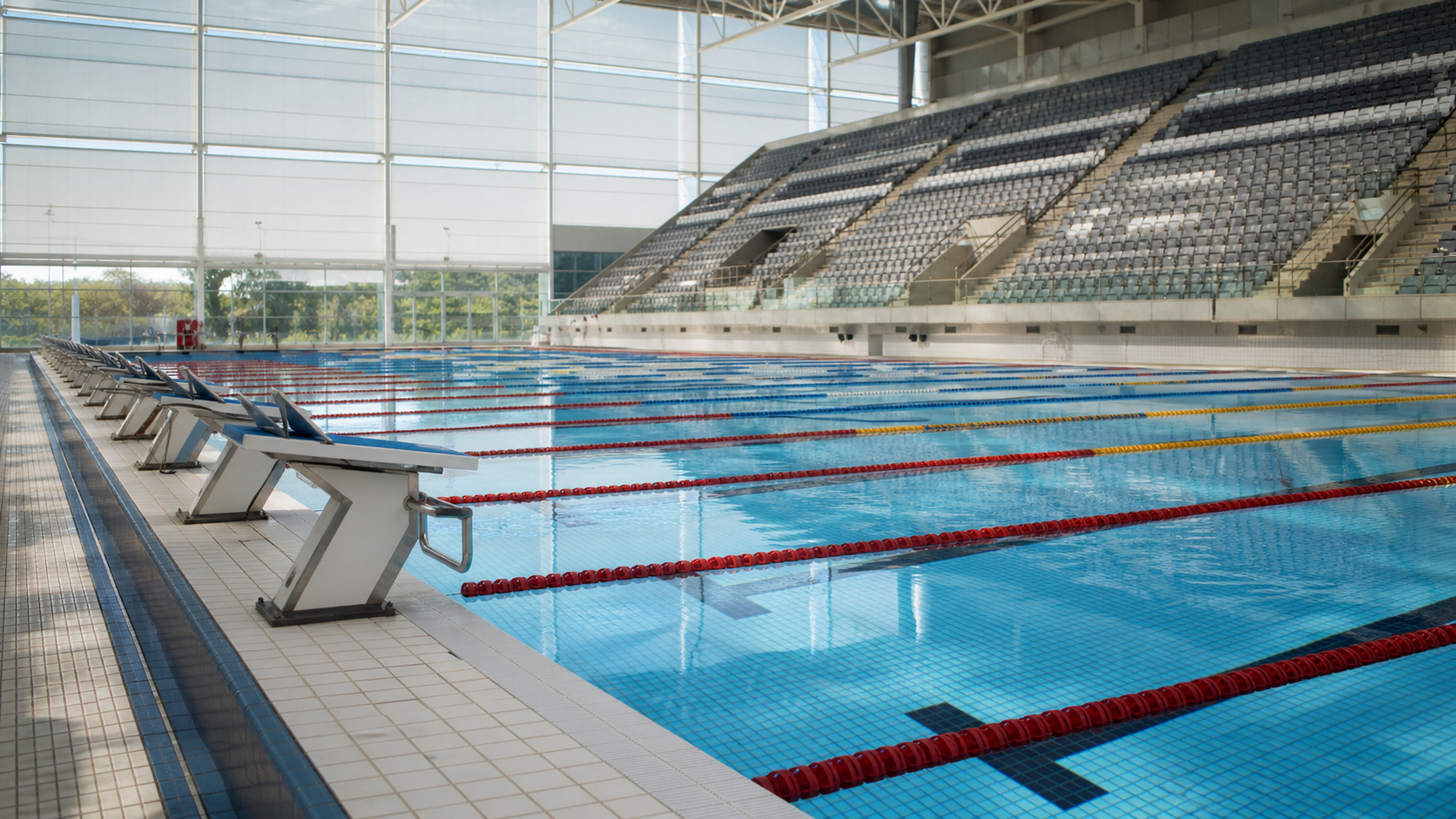
Japan's 17-year-old Shin Ohashi won the men's 200m breaststroke final at the Aichi-Nagoya Asian Games on 24 September 2026, touching in 2:04.83 at the Tokyo Aquatics Centre. Reuters reported the swim as a world record, and the Asian Games organising committee separately described the performance as a new world record and confirmed the gold medal. [1] [2]
The result is therefore a verified competition performance and an officially presented event milestone, rather than an unsubstantiated social-media claim. World Aquatics also published video coverage calling the swim a world record. However, the World Aquatics records page and Ohashi's athlete-results page available for review did not yet display the new mark, so the administrative record update or formal database confirmation remains to be checked. [4] [5]
Key points
- Ohashi won the men's 200m breaststroke final in 2:04.83 on 24 September 2026. [1] [2]
- The time was 0.65 seconds faster than Qin Haiyang's previous 2:05.48 world record from the 2023 world championships. [1]
- Kazakhstan's Denis Petrashov took silver, finishing 3.84 seconds behind Ohashi; South Korea's Cho Sung Jae won bronze in 2:08.76. [1]
- The race was held at Tokyo Aquatics Centre in front of a home crowd during the Aichi-Nagoya Asian Games. [1] [2]
- The event organiser and World Aquatics described the swim as a world record, while the accessible World Aquatics record database still required follow-up. [2] [3] [4] [5]
What happened in the final
Ohashi's swim combined the two outcomes that define the result: a major Games title and the fastest time yet reported for the men's 200m breaststroke. He led the final in 2:04.83 and took gold in front of Japanese supporters at the Tokyo Aquatics Centre. The official Aichi-Nagoya 2026 report identified the race as the men's 200m breaststroke final, dated the competition to 24 September and recorded both the time and medal. [2]
The available reporting does not provide a verified lap-by-lap breakdown, so the result should be assessed from the final time and placing rather than invented splits or assumptions about where the race was won. The finishing order was clear in the Reuters account: Petrashov was second and Cho was third. Reuters reported Petrashov 3.84 seconds behind Ohashi, while Cho finished in 2:08.76. [1]
The margin between the old and new world records is also clear. Qin's 2:05.48 mark, set at the 2023 world championships in Fukuoka, was lowered to 2:04.83. Subtracting the two official times gives a 0.65-second improvement. [1]
Why the time matters
The 200m breaststroke is an Olympic event, making the performance significant beyond the Asian Games medal table. The time moved the event's recognised benchmark below 2:05 for the first time, according to the Olympics' report, and made Ohashi the first Japanese swimmer to break the 200m breaststroke world record at an Asian Games since Kosuke Kitajima in 2002. [6]
That historical context matters because the swim links a new generation of Japanese breaststroke to one of the country's most important recent figures in the event. It also gives the Asian Games final a distinct place in the event's record progression: Ohashi did not merely win a regional multi-sport title; he surpassed the senior mark held by Qin, an established international champion, in a championship final. [1] [6]
The size of the improvement is meaningful without requiring speculation about future medals. A 0.65-second reduction in a world record at this level is a measurable performance advance. It says what happened on 24 September; it does not, by itself, establish that Ohashi will win a future world championship or Olympic title. [1]
Race context and the home setting
The final took place in Tokyo during the Aichi-Nagoya Asian Games, placing the final before a home crowd, though that setting does not diminish the performance. Reuters described the crowd as thrilled, while the Olympics report said he touched in front of a home crowd. [1] [6]
Ohashi's result also followed a period in which international attention had begun to focus on him. Reuters reported that French Olympic 200m breaststroke champion Leon Marchand had called the Japanese swimmer a major threat earlier in the week. That comment is context for the level of expectation around Ohashi, not evidence that the record was predictable or guaranteed. [1]
What the sources verify
There are several independent layers of confirmation. Reuters supplied direct reporting from Nagoya, naming the athletes, venue, time, previous record and medal order. The Aichi-Nagoya organising committee's own report independently recorded the final date, Ohashi's 2:04.83 and his gold medal. World Aquatics published a video page that called the swim a new best mark and a world record. [1] [2] [3]
Those sources support describing the swim as the new world-record performance reported from the final. They do not justify adding unreported splits, technical claims about stroke mechanics, or broader forecasts about Ohashi's career. They also should not be treated as interchangeable with a complete governing-body record entry: the World Aquatics records page returned no records data in the accessible view, and the athlete page did not yet show the Asian Games swim among the displayed results. [4] [5]
What remains uncertain
The uncertainty is administrative, not about whether Ohashi finished the final in the reported time. The event organiser has published the result, Reuters has reported it, and World Aquatics has presented the performance as a world record. The unresolved point is whether the governing body's official records and results systems have completed their update and display of the mark. [1] [2] [3] [4] [5]
That distinction matters in swimming, where a record claim must ultimately be reflected in the sport's official recordkeeping. This report does not assert that the record has been rejected, questioned or invalidated; no supplied source says that. It states only that the accessible World Aquatics database pages had not yet shown 2:04.83 at the time of review. A later official update could close that gap. [4] [5]
What happens next
The immediate follow-up is straightforward: check the official World Aquatics records and results listings for the men's 200m breaststroke and confirm that Ohashi's 2:04.83 has been entered. The Aichi-Nagoya organising committee's live-results and event systems may also provide the formal competition record as Games reporting is completed. [2] [4] [5]
For Ohashi, the next sporting test is not a claim that the record guarantees future success but the normal challenge of repeating elite form at later international meets. Reuters reported that he named a world-championship gold medal as his next goal. That is his stated ambition, not a confirmed outcome. [1]
For now, the defensible conclusion is precise: on 24 September, Ohashi won Asian Games gold in 2:04.83, a time 0.65 seconds faster than Qin's cited world record. The result has strong direct reporting and event-organiser support, while the remaining task is to verify its appearance in the governing body's formal record database. [1] [2] [3] [4] [5]