 VERDVIT
CJP protest at Mumbai’s Shivaji Park went ahead despite permission denial
The completed Shivaji Park demonstration focused on Gyanesh Kumar’s resignation and SIR claims; police denial, not approval, governed the venue dispute.
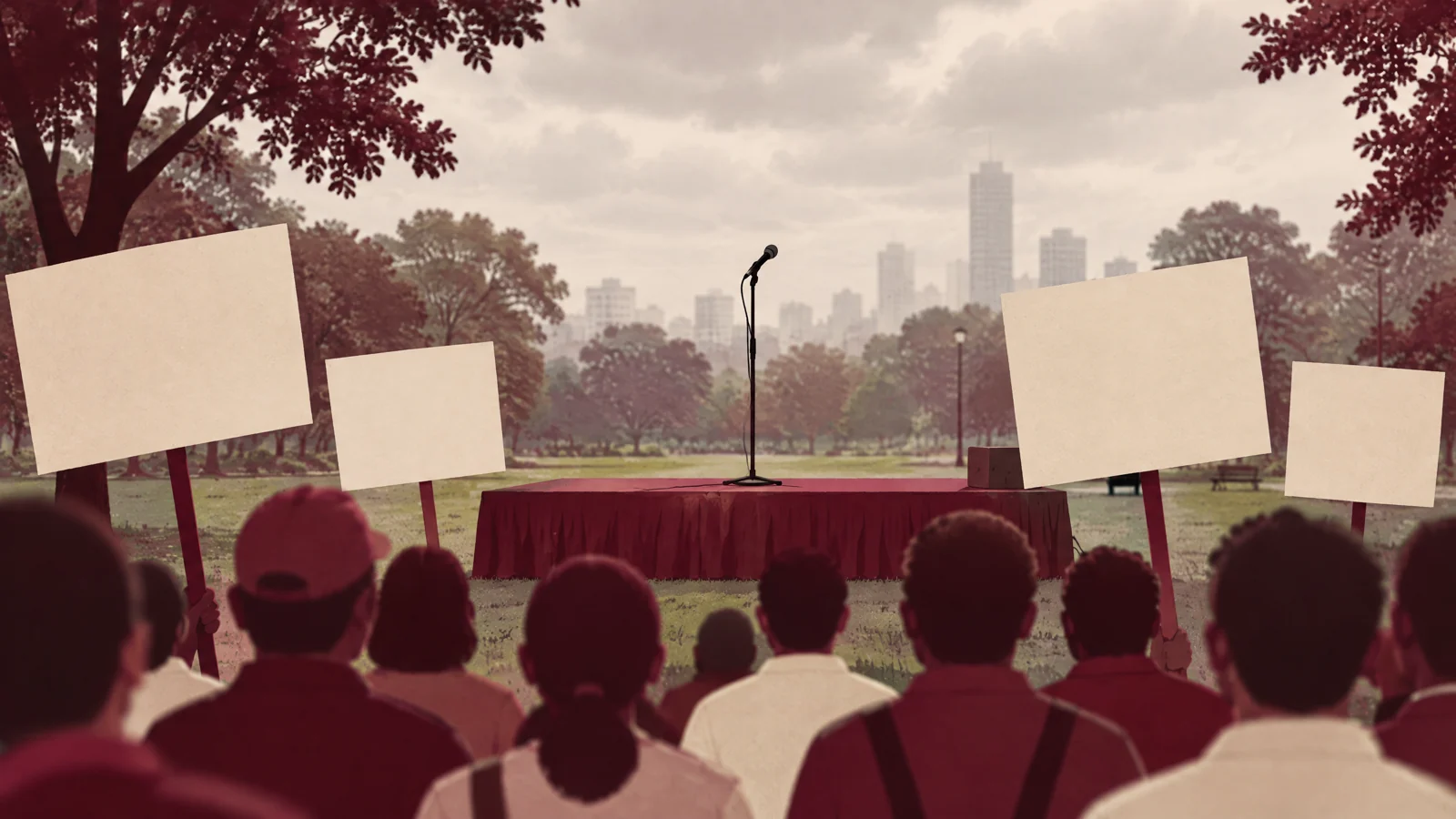
The Cockroach Janta Party (CJP) held a protest at Mumbai’s Shivaji Park on Friday, October 2, demanding the resignation of Chief Election Commissioner Gyanesh Kumar over allegations about the Special Intensive Revision (SIR) of electoral rolls. The gathering went ahead despite Mumbai Police having denied permission for the proposed venue, according to contemporaneous reporting. [1] [2]
Key points
- CJP supporters gathered at Mumbai’s Shivaji Park on October 2, 2026, for a protest demanding the CEC’s resignation. [1] [2]
- The event was completed, so this account does not present the protest as a future plan or live update. [1] [2]
- Mumbai Police had denied permission; reporting described venue restrictions and missing civic approval, not an approval to hold the protest. [3] [4]
- The SIR allegations were made by protesters and political groups; the Election Commission denied wrongdoing and described its voter-roll work as an integrity exercise. [2] [5]
- No resignation or successor for Kumar was established in the records reviewed for this article. [4] [6]
What happened in Mumbai
CJP supporters reached Shivaji Park during the October 2 gathering, with security deployed around the central Mumbai venue. The Hindu reported that thousands of young men and women assembled despite the permission denial, while its live updates recorded hundreds moving towards the park earlier in the afternoon. [1] The Guardian also described thousands gathering in Mumbai, while noting that hundreds had assembled by the afternoon stage of its reporting. [2] Because those accounts use different observations and do not provide a common audited count, this article uses the outlets’ descriptions rather than converting them into a precise attendance figure.
The Hindu’s report identified the main demand as Kumar’s resignation. Its live coverage also recorded speeches by CJP leaders and supporters, including calls for action over alleged voter deletions. The event was part of a wider mobilisation, but the Mumbai gathering should not be merged with separate demonstrations in Delhi. The Hindu reported more than 700 detentions in the national capital that day, while the Guardian described at least 700 people being detained there. [1] [2] Those figures concern the separate Delhi action, not attendance or detentions at Shivaji Park.
The available reporting describes the Mumbai protest as having taken place and then passed without a reported police crackdown at the site. Frontline, in a report published the following day, said the police cordoned off the area after allowing protesters to reach it and that the event was uneventful. It also reported that thousands participated, but did not publish a verified count. [7]
What permission was denied
The permission issue needs precise wording. The Indian Express reported on September 28 that Mumbai Police had denied CJP permission to hold the October 2 protest at Shivaji Park. It said CJP founder Abhijeet Dipke had approached the Shivaji Park police station and that police cited the ground’s permitted use, a 2013 Bombay High Court order, the absence of required BMC permission, and potential noise and traffic concerns in a residential and silence-zone area. [3]
Frontline separately reported after the event that permission to use Shivaji Park had been denied, citing multiple court orders. It said police allowed protesters to reach the area and managed the gathering without lathicharge or other reported violence. [7] These accounts support “permission denied” and do not support language saying the authorities approved the demonstration. Nor should the Mumbai event be described using the more uncertain “intimation acknowledged” wording attached to the proposed October 10 Delhi action in separate reporting. The Mumbai and Delhi permission questions concern different events and different dates.
What protesters demanded
CJP’s central demand was Kumar’s resignation. The Hindu also reported demands to freeze the SIR roll and make the process for appointing the Chief Election Commissioner more transparent, with civil-society participation. [1] The Guardian described the mobilisation as a response to concerns that people were being unfairly removed from electoral rolls and said the movement wanted the SIR reversed. [2]
Those are the protesters’ positions, not established findings. The Guardian reported that the Election Commission denied wrongdoing and had directed officials to expedite registration for newly eligible voters and people who said they had been wrongly omitted. [2] Reuters likewise reported that the commission and government denied allegations that voter rolls had been manipulated to favour the ruling BJP. [5] This article therefore describes alleged removals and irregularities as contested claims, without presenting them as proven disenfranchisement, criminal conduct, or an official conclusion.
The reports also do not establish a single national number of people improperly removed as a result of the Mumbai protest. Figures appearing in broader SIR coverage should not be imported into this event report unless tied to an authoritative record and a clearly stated baseline. The same caution applies to claims about electoral outcomes or motive.
What the official record shows
The Election Commission’s official “Hon’ble Commission” page, accessed for this review, lists Gyanesh Kumar as Chief Election Commissioner and says he took charge on February 19, 2025. It also lists Sukhbir Singh Sandhu and Vivek Joshi as Election Commissioners. No successor is listed on that page. [4]
A Reuters follow-up published on October 4 said Kumar had not publicly responded to the resignation demands or commented on the protests. [6] Together, the official listing and the follow-up support a careful formulation: the demand remained unresolved in the records checked, and no resignation or successor should be reported as a completed result. The article’s original private timestamp must not be treated as its public first-publication time; that timestamp is an internal draft field, not a newsroom publication record.
Why this remains a distinct report
Verdvit’s public inventory includes a Bengaluru report about the October 8 Freedom Park protest and a separate report about the proposed October 10 Jantar Mantar action in Delhi. [8] [9] Neither covers the completed October 2 Mumbai event at Shivaji Park. The Mumbai article can therefore have distinct intent if it stays focused on what happened there, the documented permission denial, and the distinction between protester allegations and official responses.
It should not be presented as breaking news on October 9, and it should not repeat the future Delhi event as though it were the Mumbai outcome. The reviewed full reports contain no evidence that this was a film-release event; references to slogans or film dialogue in a live-blog context would not change the subject. The source-bounded account is a completed news report about a historical protest, with the permanent slug retained and publication timing assigned separately at release.